
Jisifang Boutique by Neri&Hu: Textile Lanterns in Shanghai's Columbia Circle
A fabric brand inside a postindustrial landmark
The 2018 Jisifang boutique occupies the ground floor of a building in Shanghai's Columbia Circle, a regenerated compound of historic structures and former industrial spaces. Neri&Hu designed the interior for a fabric producer developing a fashion identity, using the character of textiles to rethink how a retail room can be divided. This is the original Columbia Circle store, distinct from the later Jisifang and Woven Moonlight shops in Panlong Tiandi.
A disciplined exterior, an unexpected interior
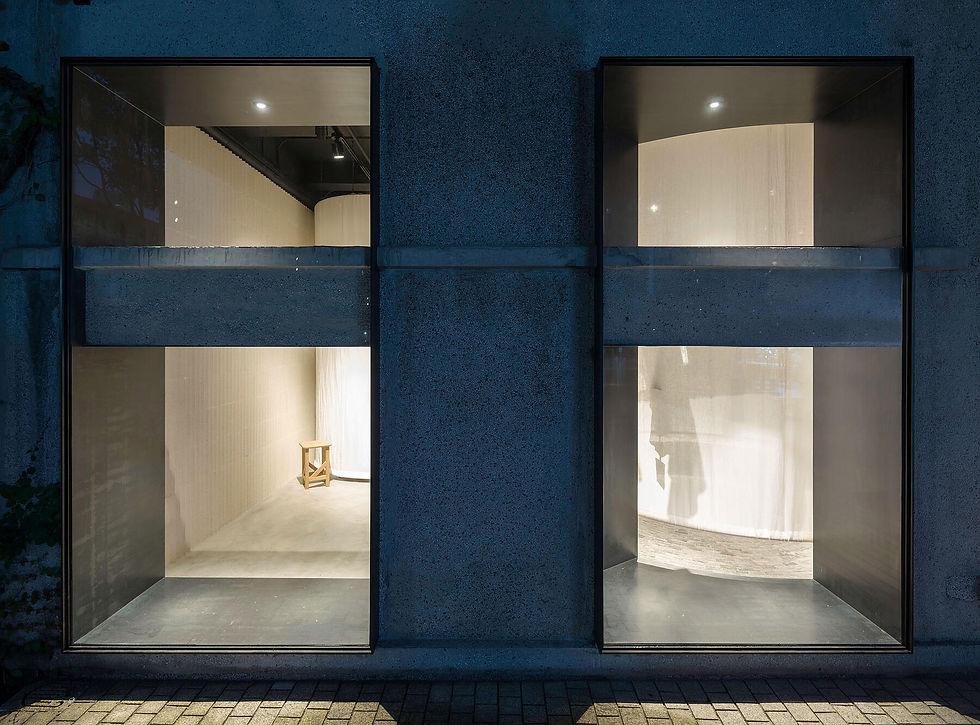
The frontage faces a public plaza and uses regularly spaced vertical openings within the existing concrete enclosure. The old building provides a rational and relatively heavy exterior shell. Inside, the geometry changes completely: a collection of suspended circular rooms introduces soft, fluid boundaries that respond to the products and the brand's material heritage.
An architectural idea drawn from textiles
The studio refers to nineteenth-century theorist Gottfried Semper's understanding of the textile wall as a fundamental architectural element. Instead of constructing opaque walls, the boutique is organised with suspended cylindrical fabric enclosures. The use of cloth gives an ephemeral quality to spaces that nevertheless have recognisable limits and purposes.

The lanterns and their different roles
Each hanging textile cylinder contains a different retail function. A smaller room can be used for changing, another presents home objects, while a central showroom of roughly seven metres in diameter contains a larger product display. The enclosures make categories legible without using conventional full-height partitions or a rigid grid of shelving.


Movement through shifting layers
As customers walk around the fabric lanterns, overlapping drapery gives an impression of changing transparency. A screen may conceal one viewpoint while revealing another. This shifting relationship between visibility and privacy allows garments and accessories to remain the focus while also making movement an architectural experience.

The contrast of heavy ground and light walls
The floors use concrete and concentric circles of reclaimed brick, which sometimes rise to form tables or plinths. These heavy surfaces create a marked contrast with the lightness of the suspended textile. Neri&Hu makes this tension between mass and fabric the central design quality of the shop, connecting construction to the materials from which garments are made.


A palette grounded in authenticity
Organic cotton, light oak, matte tile, raw steel, reclaimed brick and unfinished concrete give the boutique a restrained tactile palette. Rather than use a large number of decorative finishes, the designers allow the natural character of each material to remain visible. This supports the brand's interest in silk, wool, cotton and linen.

Terracotta at the perimeter
The enclosing walls are lined with fluted ivory-toned terracotta bricks, thickening the apparent edge of the store and mediating between the circular fabric rooms and the more regular shopfront windows. The repeated grooves add a fine pattern to the heavy outer shell, providing a different material rhythm from the hanging cloth.

A retail interior as spatial craft
Jisifang demonstrates how the display of textiles can generate an architecture made of textiles. The suspended cylinders provide intimate rooms, while the concrete and brick ground establishes stability. The store is not simply a minimal background for merchandise; its construction and materials express the relationship between clothing, shelter and the human body.

Project information and photo credits
Project: Constellation of Enclosures | Jisifang Boutique, Ground Floor, Building 3, 1262 Yan'an West Road, Columbia Circle, Shanghai, China. Interior design: Neri&Hu Design and Research Office. Area: 130 m². Completed June 2018. Photography: Pedro Pegenaute. Each photograph is credited in its caption.


Comments