Sacai Menswear Spring/Summer 2027: Hybrid Construction and Modern Utility
Updated: 1 day ago

Sacai Menswear Spring/Summer 2027 develops Chitose Abe’s long-standing interest in hybrid construction, combining familiar garments into unexpected new forms. Tailoring, military references, sportswear and technical details are layered and fused, creating pieces that feel both functional and conceptually precise.
The Art of Hybrid Dressing
The collection’s defining idea is transformation. Jackets merge with outerwear, shirts extend into layered constructions, and contrasting fabrics divide single garments into multiple visual identities. This hybrid logic gives the runway a sense of constant movement and reinvention.

Utility Meets Precision
Technical pockets, straps and utilitarian details appear throughout, but the collection never feels purely functional. These elements are controlled through exact pattern cutting and thoughtful proportion, allowing practical references to become part of a sophisticated design language.

A Wardrobe Built for Layering
Layering is fundamental to the season. Lightweight fabrics and modular shapes allow garments to interact without becoming visually heavy. The styling demonstrates how complex construction can still feel wearable when proportion is carefully managed.

The icönik View
Sacai Spring/Summer 2027 is strongest when it turns technical complexity into effortless-looking clothing. The collection reinforces the house’s reputation for intelligent experimentation while remaining grounded in a wardrobe people can actually imagine wearing.

For icönik, it is a sophisticated expression of modern utility—innovative without becoming inaccessible.
Hybrid construction as a Sacai signature

Sacai’s relevance comes from treating garments as systems that can be combined rather than fixed categories. A jacket can absorb the logic of a shirt, outerwear can merge with tailoring, and familiar military or workwear details can be reorganized into new silhouettes. Spring/Summer 2027 continues that process of hybridization, making construction visible as part of the design language.
Utility becomes more sophisticated through layering

Functional references are strongest when they remain useful rather than becoming decoration. Pocket placement, adjustable elements and layered panels can change proportion while preserving practicality. Sacai’s approach demonstrates how utility can support luxury when materials, finishing and balance are handled with precision.
Movement is designed into the garment

Hybrid clothing can become heavy or visually complicated, so movement is essential. Openings, contrasting weights and carefully controlled volume help layered pieces respond to the body instead of overwhelming it. This is where Sacai’s technical intelligence becomes most apparent: complexity is organized so the wearer still appears mobile.
Why the approach remains modern

Contemporary wardrobes already mix categories—formal and casual, technical and decorative, masculine and feminine. Sacai turns that everyday reality into a construction method. Rather than styling separate pieces together, the brand builds the collision into the garment itself, which gives its work a recognizable identity beyond seasonal trends.
Craft and construction
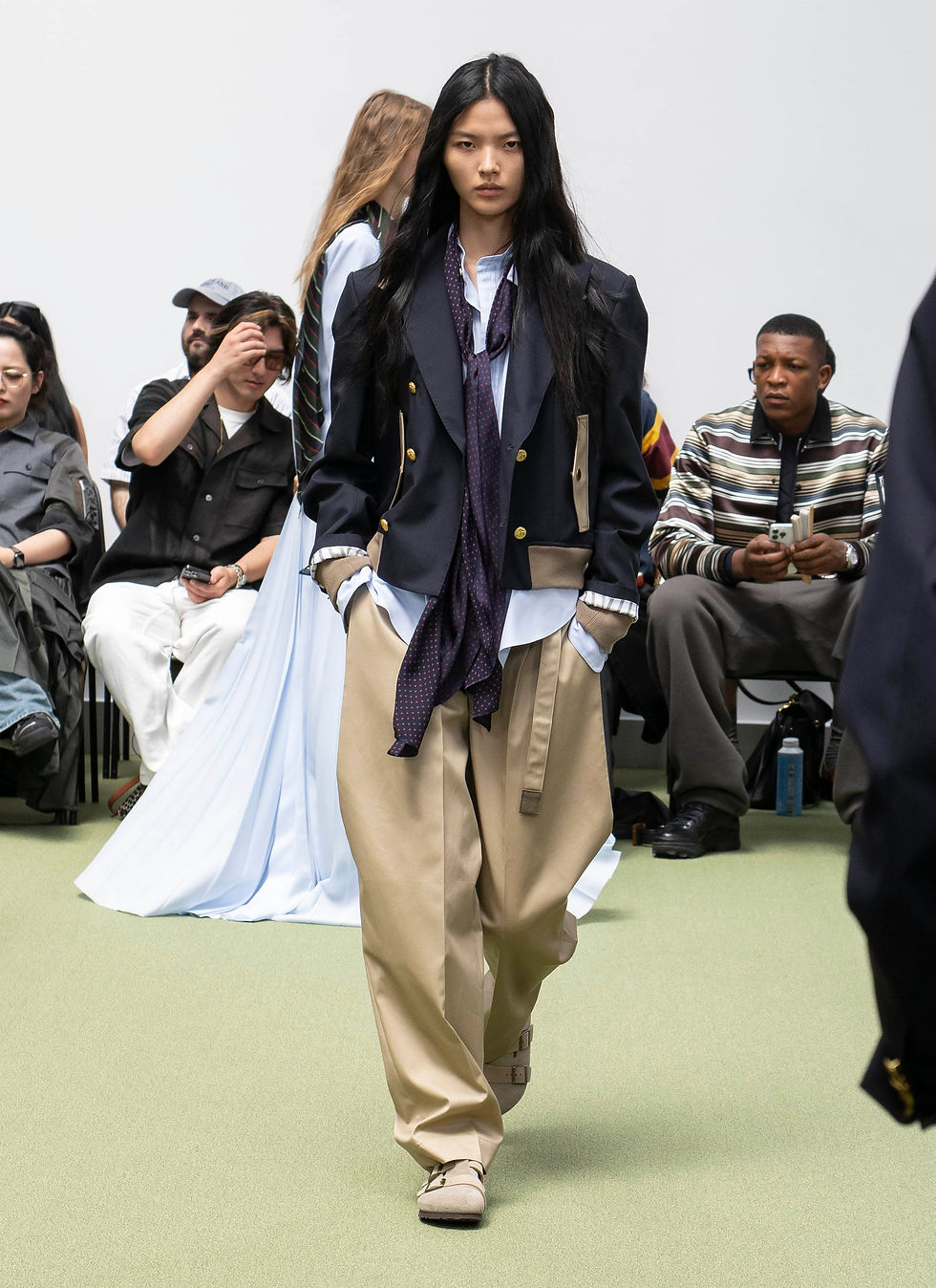
Sacai Menswear Spring/Summer 2027 should be judged at both distance and close range. Silhouette and color create the immediate impression, but construction, material contrast, articulation and finishing determine whether each look sustains attention. Weight and balance matter as well: a technically complex garment succeeds only when its layered components move naturally with the body rather than restricting it or overwhelming the wearer.
Hybrid design succeeds when the garment still reads clearly

Sacai’s technical complexity is most effective when the wearer can still understand the original garments being combined. A tailored jacket, bomber, shirt or utility layer remains visible even after Chitose Abe splices categories together. That legibility prevents hybrid construction from becoming visual noise. Spring/Summer 2027 reinforces the value of this method: innovation comes from changing relationships between familiar pieces, not from abandoning function. The result is experimental menswear that can still be integrated into a real wardrobe.


Comments