A Less Wasteful Kitchen Starts Before the Food Reaches the Bin
A half-used ingredient becomes a waste problem long before someone throws it away. It may begin as an optimistic shopping plan, a forgotten packet or a meal that never fitted the week. Looking only at the bin misses the decisions that produced it.
The US Environmental Protection Agency's household guidance puts planning, preparation and storage at the centre of prevention. It recommends checking existing supplies before shopping and buying with actual meals in mind. The principle is useful beyond the United States, while storage and food-safety advice should follow the rules and product guidance applicable where you live.
Plan the week you will actually have
Start with the number of meals likely to be cooked at home, rather than an ideal schedule. A busy evening may call for a simple familiar dish. Leaving realistic space for that choice can be more effective than purchasing ingredients for a complicated recipe that depends on spare time.
Choose one or two ingredients that can appear in different meals without repeating the same dish. The aim is a manageable relationship between purchases, rather than a rigid menu that cannot survive a change of plans.
Make existing food visible
Before writing a list, inspect the refrigerator, freezer and cupboard. Note what is already open and follow its storage instructions and relevant dates. Keep a short, accessible inventory where the people who cook can see it.
Do not confuse reducing waste with taking risks. If a food's safety is uncertain, consult authoritative guidance; an improvisational recipe cannot make unsafe storage harmless.
Notice the recurring mismatch
For a short period, record what is discarded and why. Was too much cooked? Did a large package exceed the household's needs? Did a product require equipment or time that was unavailable?
Choose one recurring problem to address first. Smaller quantities, clearer labels or a more realistic shopping rhythm may be more useful than another collection of leftover recipes. The best system is one people will continue using when the kitchen is busy. Waste prevention then becomes part of ordinary meal planning, rather than a separate performance of perfect thrift.
Sources
https://www.epa.gov/recycle/preventing-wasted-food-home
Ingredients, cupboards and everyday preparation
These real photographs illustrate kitchen supplies, preparation and storage spaces. They are not images of an EPA programme or a measured waste-reduction case study. People, brands, labels and pictured arrangements are not endorsements or food-safety instructions; the article’s safety guidance remains unchanged.

Illustrative photograph: Ingredients before cooking · Annie Trevaskis / Unsplash 
Illustrative photograph: Kitchen utensil drawer · Sasun Bughdaryan / Unsplash 
Illustrative photograph: Meal preparation · Vitaly Gariev / Unsplash 
Illustrative photograph: A prepared vegetable dish · Nadine Primeau / Unsplash 
Illustrative photograph: Making pantry supplies visible · Cabri Caldwell / Unsplash 
Illustrative photograph: Assorted dry ingredients · Maddi Bazzocco / Unsplash 
Illustrative photograph: Preparing ingredients for baking · Jackson Barger / Unsplash 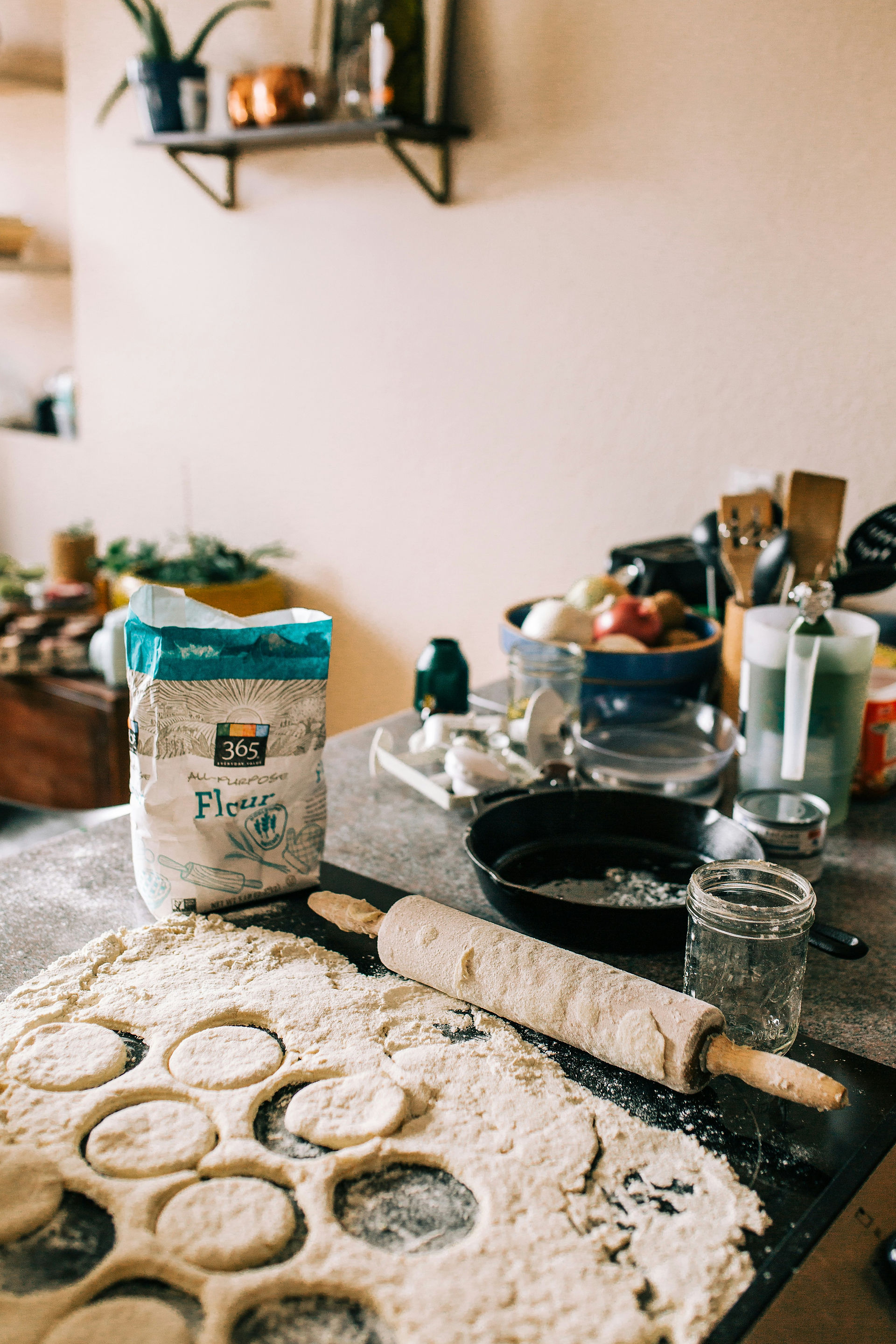
Illustrative photograph: Ingredients and dough for baking · Kelsey Booth / Unsplash 
Illustrative photograph: Vegetables at a preparation counter · tommao wang / Unsplash 
Illustrative photograph: Refrigerator contents · Nicolas J. Barbier / Unsplash



Comments