Scandinavian Design: Function Meets Beauty
An examination of useful objects, regional differences and the enduring relationship between beauty and craft.
Scandinavian design is often reduced to pale timber, restrained colors and open space. Yet the most enduring objects from the Nordic countries are not merely minimalist. They make a proposition about daily life: a chair, lamp or room should be considered through the needs of its users, the materials that give it form and the circumstances of its production. That proposition has generated different answers across Denmark, Sweden, Norway, Finland and Iceland. A shared label is useful only if it does not erase those differences.

Danish Modern and the craft of furniture
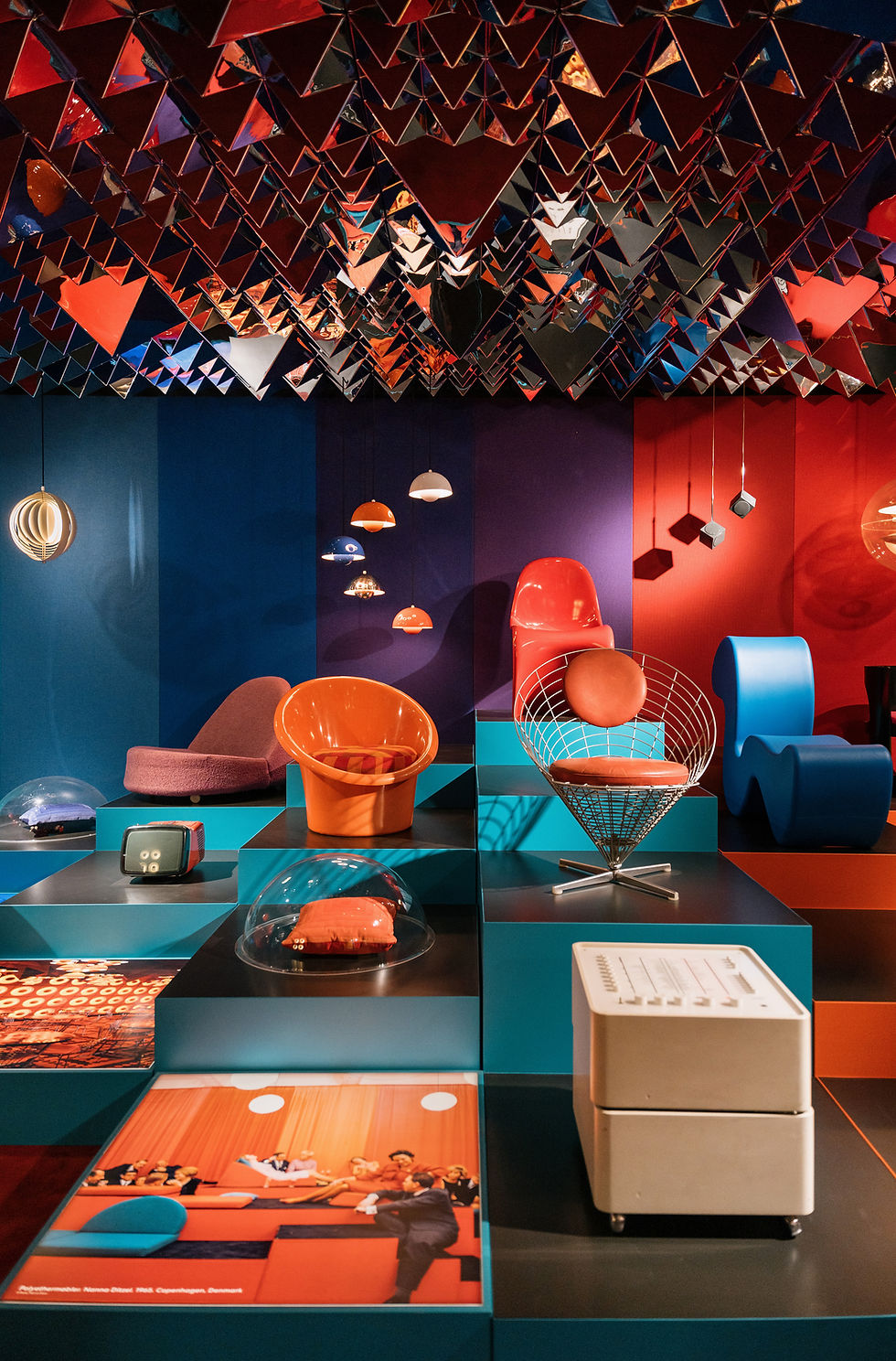
In Denmark, twentieth-century furniture makers brought modernist ideas into close dialogue with cabinetmaking. The Designmuseum Danmark exhibition Danish Modern examines work from the 1920s through 2000, including Kaare Klint, Hans J. Wegner, Nanna Ditzel and Arne Jacobsen. Its focus on the methods behind furniture is as revealing as the celebrated finished chairs. A recognizable profile can be the outcome of extensive experiments with joinery, proportions, balance and the experience of sitting.


Function is not the opposite of expression. A considered object can be quiet and still have a memorable personality. Seat height, back support and the placement of armrests determine whether a chair remains comfortable after an hour. The diffusion of a light source changes the experience of a room without making an ornamental statement. Utility becomes an aesthetic force when the reasons for these choices can be felt in use. Beauty arises partly from the confidence that an object understands its purpose.


Materials, making and care
Materials add another level of judgment. Wood may be closely associated with Nordic interiors, but the history includes metal, textiles, glass, ceramics and plastics. Each offers different structural possibilities and environmental consequences. Rather than identifying quality with one favored material, ask whether the object's construction takes its chosen material seriously. Are its joints dependable, its surface appropriate, and its components repairable? Can an owner care for it over years? A photographic image rarely answers those questions.


The question of accessibility
Accessibility also requires precision. Affordability, durability and refinement do not always sit comfortably together. The IKEA Museum describes its democratic-design philosophy through five principles: form, function, quality, sustainability and low price. This is a manufacturer's framework, not a universal definition of Nordic design. It does, however, expose a productive tension: an exquisite object available only to collectors serves a different social purpose from a useful object produced at scale. Both may deserve critical attention, but for different reasons.
Beyond a single Nordic style
Historical context prevents the aesthetic from turning into a decorating formula. Danish Modern gained international visibility in the middle of the twentieth century, while contemporary Nordic practice has a much broader range of technologies and cultural references. An organic curve should not automatically be labeled Danish, nor should every white interior be called Scandinavian. Designers respond to changing patterns of housing, labor, manufacturing and resource use. Regional histories matter precisely because this is not one uniform or unchanging style.

Choosing for years of use
For someone selecting furniture today, the lessons are practical rather than prescriptive. Examine how an object works with what is already in the room and how it will age. Read dimensions and maintenance guidance instead of relying exclusively on styled photographs. If possible, sit in the chair, open the cabinet, switch on the lamp. Ask about origin and replaceable parts. The value of a design is not proven by its resemblance to an archive photograph; a contemporary piece may honor the underlying discipline without copying a historic silhouette.

The lasting appeal of Scandinavian design is therefore less a catalog of recognizable chairs than an approach to decisions. It asks whether an object clarifies an everyday activity, whether its proportions are generous without waste and whether its making can withstand scrutiny. That approach leaves room for color, experimentation and disagreement. Function and beauty meet most convincingly not when one is used to justify the other, but when both are considered from the first sketch to the years of use that follow.


Comments