Post Archive Faction Spring/Summer 2027: Experimental Sportswear and the Architecture of Movement

Post Archive Faction Spring/Summer 2027 approaches sportswear as a design system rather than a fixed category. Through asymmetry, technical construction and modular layering, the collection examines how garments can adapt to movement while maintaining a highly distinctive visual identity.
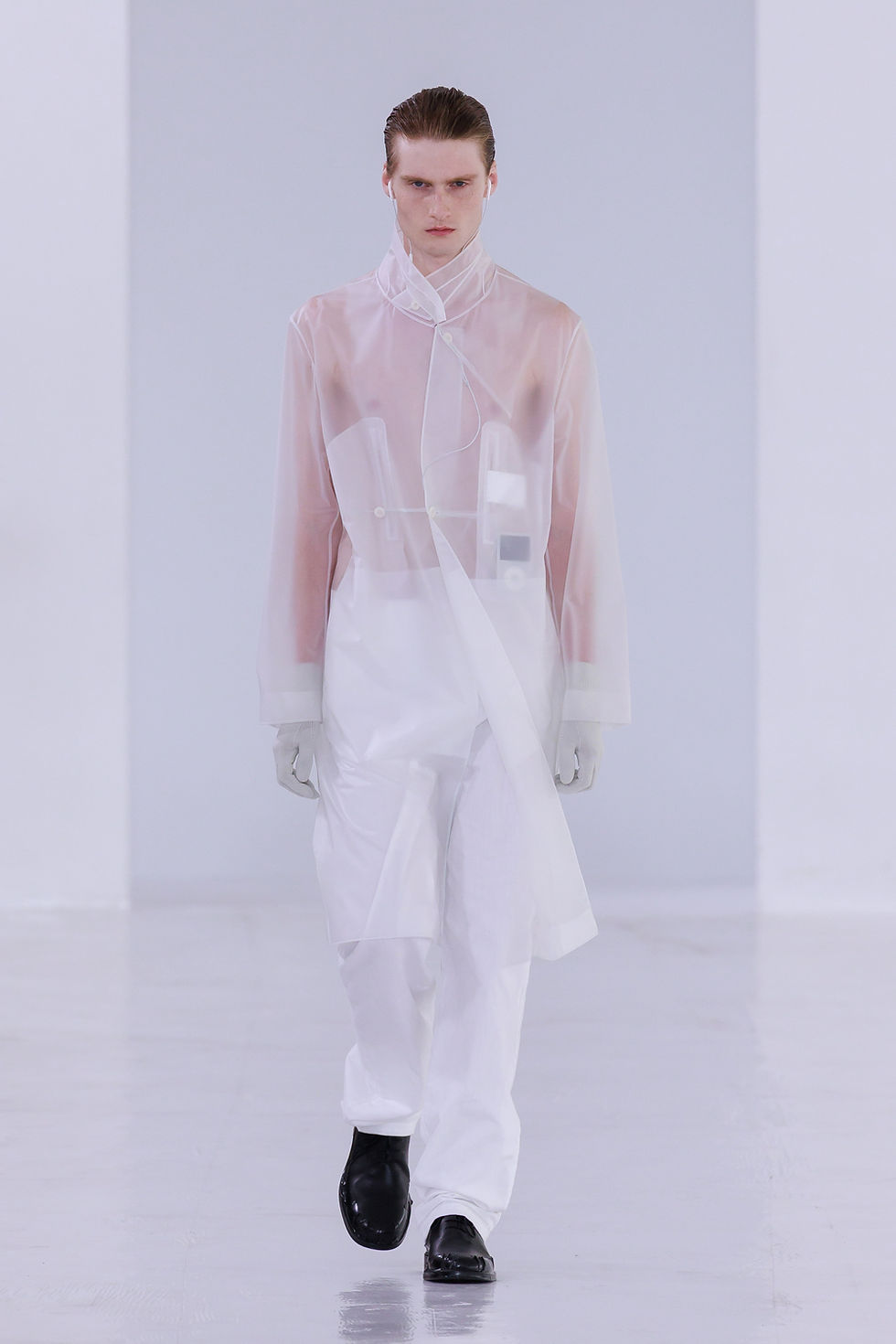
Technical Design as a Creative Language
Performance fabrics, engineered seams and functional details are central to the collection, but their purpose extends beyond practicality. They become visual tools that reshape the body and alter the way familiar sportswear forms are perceived.

Asymmetry and Controlled Disruption
PAF’s use of asymmetry remains one of its clearest signatures. Uneven closures, displaced lines and modular panels create tension without sacrificing wearability. The garments feel experimental, yet still rooted in real movement and function.

A New Generation of Luxury Sportswear
The collection reflects a broader shift in luxury menswear, where technical innovation and subcultural credibility can be as important as traditional tailoring. PAF occupies that space with unusual clarity, combining conceptual rigor with a strong street-level identity.

The icönik View
Spring/Summer 2027 reinforces Post Archive Faction as one of the most interesting labels working at the intersection of performance, fashion and architecture. The collection feels directional because its experimentation remains connected to the body and to movement.

For icönik, PAF is essential to understanding where contemporary technical menswear is heading.

Asymmetry becomes an engineering tool
Post Archive Faction uses asymmetry not simply for visual disruption but to change how a garment moves and how the body is read. Offset closures, curved seams and irregular panels can redirect volume around the wearer. Spring/Summer 2027 extends that architectural logic into sportswear, where construction is expected to support movement as well as image.

Technical fabrics gain new cultural meaning
Performance materials traditionally communicate function, but experimental designers use them to create a different kind of luxury. Surface, tension and engineered lightness can make synthetic fabrics feel as considered as traditional tailoring cloth. The result reflects a wider change in menswear, where technical credibility and design authorship increasingly overlap.

Modularity fits the contemporary wardrobe
Garments that adjust, layer or transform respond to the way people actually move between environments. Modular design can shift a piece from protective outerwear to lighter layering without requiring a complete change of outfit. For PAF, this flexibility is also aesthetic: visible systems of adjustment become part of the visual identity.

Why the collection matters
The importance of experimental sportswear lies in its ability to challenge the old division between fashion and equipment. When pattern cutting, ergonomics and textile technology are treated as creative material, utility no longer sits outside luxury. It becomes one of the ways luxury demonstrates intelligence.

Design beyond the photograph
In Post Archive Faction Spring/Summer 2027, use is as important as appearance. Circulation, daylight, acoustics, scale and maintenance determine whether a space or object remains convincing after the first photograph. Materials change with time, so stone, timber, metal, upholstery or plaster should be judged by how they age and can be repaired, not only by how they look when newly installed.
Why PAF’s construction language remains distinctive
Post Archive Faction is most persuasive when technical function and visual distortion are inseparable. Curved seam lines, asymmetrical panels and modular components do not merely make a garment look futuristic; they redirect how volume sits around the body and how layers interact in motion. Spring/Summer 2027 continues that logic by treating sportswear as an architectural problem. The collection’s wider relevance comes from this precision: it shows how performance-derived materials can support a recognizable design authorship rather than becoming generic techwear.


Comments