Sketch to Runway: How a Fashion Idea Becomes a Garment
A drawing proposes a silhouette. Pattern cutting, fittings, material choices and backstage decisions determine whether it can live on a body.
A fashion sketch can make a collection appear remarkably certain. The silhouette is already there; the proportions seem settled; even the motion of fabric can be suggested with a few marks. Yet the drawing is not a garment. Between that first image and a runway look lies a sequence of decisions about bodies, materials, construction, cost and time. The sequence differs from one studio to another, but the same question keeps returning: can the proposed shape actually be made, worn and understood?

A jacket under construction, with internal layers and temporary stitches visible. Photo: Sebastian Hoofs / CC BY-SA 4.0. Original photograph · CC BY-SA 4.0
These photographs illustrate measuring, pattern work, cutting, assembly and garment-making spaces in separate tailoring, costume and sewing contexts. They do not follow one collection from sketch to runway or document a collection discussed here. Individual photographers and Creative Commons licences are credited below each image. All are reproduced uncropped and without creative alteration; display resizing only.
Research becomes a proposition
The beginning is often less glamorous than the final illustration. Designers gather references and test a proposition about shape, color or use. A reference might come from architecture, clothing history or the properties of a particular textile. Research becomes productive when it is translated into decisions rather than copied as surface decoration. What is the intended movement? Which part of the body does a garment emphasize or release? What should the wearer experience as they walk or sit?

Spools of thread at the Pamuk alterations workshop in Berlin-Charlottenburg. Photo: Neuköllner / CC BY-SA 4.0. Original photograph · CC BY-SA 4.0
Pattern, toile and fitting
Pattern making is one of the points at which those questions become physical. A flat drawing must be turned into pieces of material that can form a three-dimensional object. Some ideas are investigated through flat-pattern drafting; others are developed through draping on a form. A first toile, often made from inexpensive test cloth, allows a designer and pattern cutter to examine volume, balance and the relationship between the garment and the body without committing immediately to final fabric.
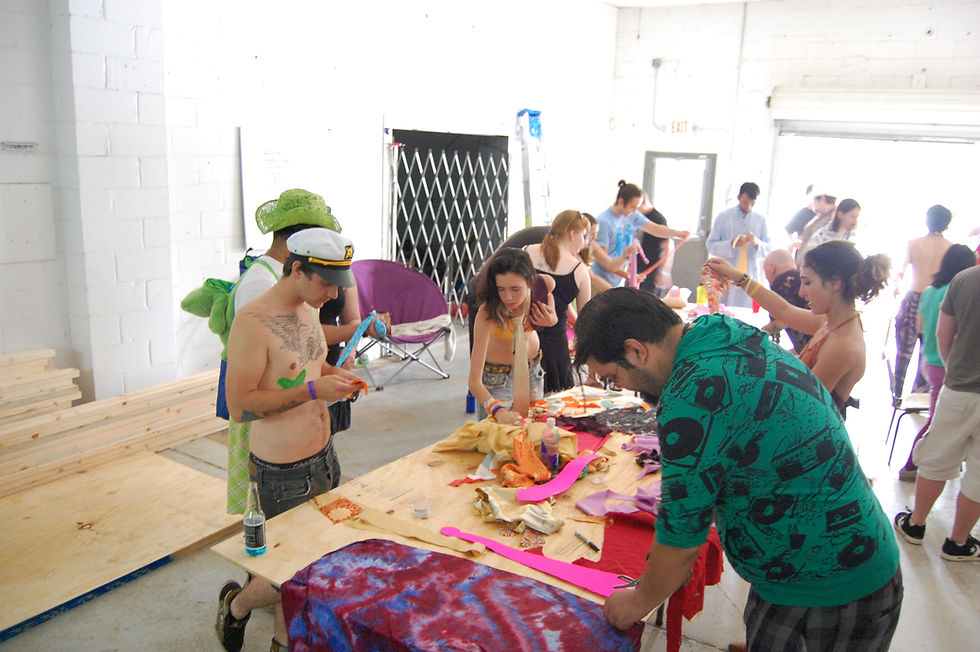
Pattern tracing in a sewing class. Photo: sparr0 / CC BY-SA 2.0. Original photograph · CC BY-SA 2.0

Pieces on dressmakers dummy. Photo: maco *nix / CC BY-SA 2.0. Original photograph · CC BY-SA 2.0
A fitting is not merely a test of whether a garment closes. It reveals how the idea behaves when a person moves. A sleeve may restrict an arm; a seam may pull a line out of place; a dramatic hem may interrupt a stride. Changes made at this stage can be substantial. A striking sketch may require simpler engineering, or a quiet design may become more interesting once a structural problem has been solved. The person doing the fitting, the technician and the designer contribute different forms of knowledge.
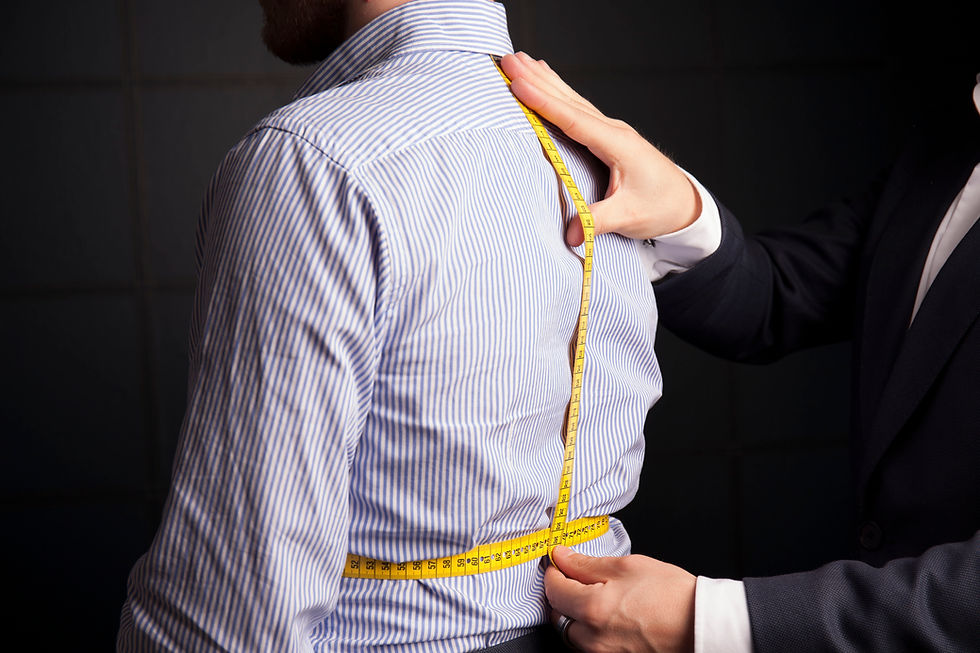
A tailor takes body measurements with a flexible tape. Photo: Sebastian Hoofs / CC BY-SA 4.0. Original photograph · CC BY-SA 4.0
Material and construction
Fabric selection changes the proposition again. A silhouette drafted in firm cotton will not necessarily survive a change to fluid silk, heavy wool or coated material. Weight, drape, opacity, recovery and the treatment of edges affect what is feasible. Fastenings and linings are part of the design, not afterthoughts hidden from view. The most convincing construction is not always the most elaborate: it is the construction that allows the intended effect to remain legible in wear.

Fabric is cut along chalked outlines. Photo: Martin Hipangwa / CC BY-SA 4.0. Original photograph · CC BY-SA 4.0

Cutting out fabric. Photo: jrouedcunliffe / CC BY-SA 2.0. Original photograph · CC BY-SA 2.0
From one garment to a collection
The journey also depends on the collection's purpose. A singular couture commission can accommodate processes that a ready-to-wear production run may not. Repeated sizing, available materials, manufacturing tolerance and delivery dates become central when a design must work across multiple garments. The Metropolitan Museum of Art's examinations of couture and of the relationship between hand and machine remind us that these categories involve overlapping techniques rather than a simple opposition between craft and technology.

A close view of a sewing machine inside the Filip Cezar workshop. Photo: Cristian Ilie / CC BY-SA 4.0. Original photograph · CC BY-SA 4.0
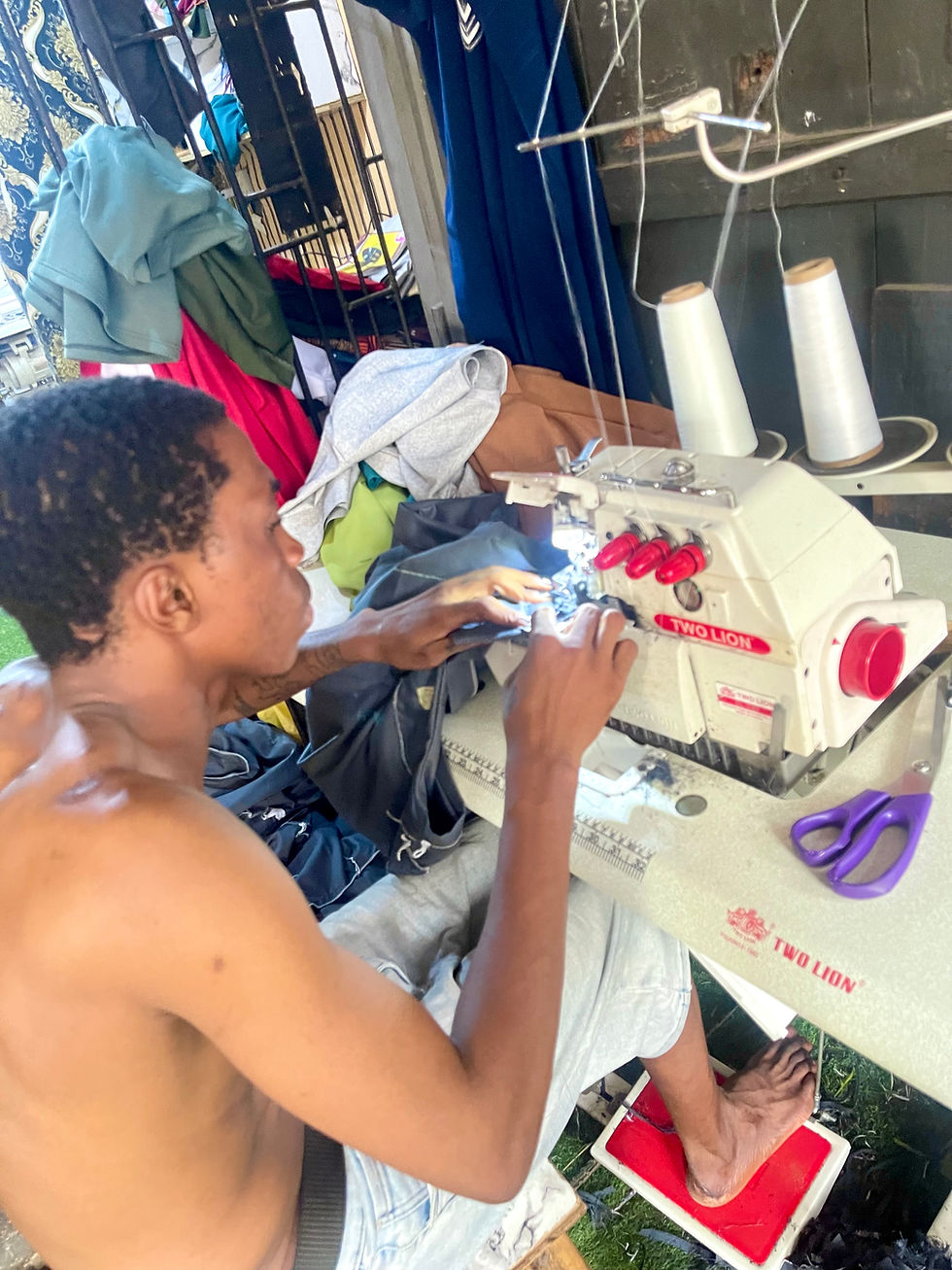
Garment edges are finished at a sewing machine in Nigeria. Photo: Confidence24 / CC BY-SA 4.0. Original photograph · CC BY-SA 4.0
Preparing the show
Near the show, the work expands beyond the atelier. Looks must be finished, documented, styled, fitted to their models and organized into a sequence. Shoes, accessories and movement can alter how proportions read. A runway show is therefore an editorial arrangement as well as a presentation of objects. Lighting and pace create an experience, but they should not be mistaken for evidence of how the clothes are made or how they perform after the event.

Costume workshop, La Monnaie / De Munt, Brussels. Separate theatre-costume context. Photo: Sally V / CC BY 4.0. Original photograph · CC BY 4.0
To understand a runway image more fully, look beyond the striking pose. Notice the hang of a sleeve, the behavior of a skirt in motion, the balance between an outer layer and the pieces beneath it. Consider what the material makes possible and what it resists. A successful transition from sketch to runway is not the simple realization of an untouched idea. It is the record of an idea tested, revised and made more precise by the people who bring it into physical form.


Comments