
Park Hyatt Toronto: Studio Munge Interprets Landscape Through Materials
A familiar address, reconsidered
Studio Munge’s redesign of Park Hyatt Toronto treats a familiar urban landmark as a place where material and cultural references can be brought into everyday use. The hotel reopened in September 2021 following a wider redevelopment by Oxford Properties, with KPMB responsible for the architecture. Within that collaboration, Munge developed interiors grounded in Canadian landscapes and the work of the Group of Seven.
The distinction between architectural restoration and interior design is central to understanding the commission. A historic address carries public memories, established routes and expectations. The interior has to work with those conditions while providing a coherent new setting for arrival, gathering and retreat. Here, the project’s national references are expressed through finishes and atmosphere rather than a literal scenic backdrop.

From landscape to material
Walnut and limestone from Owen Sound appear in the studio’s account of the guestrooms and principal suite, softened by textiles. The materials make the idea of place tangible. A pale stone surface has a different presence from the darker grain of timber; textiles modulate both. The rooms depend on those shifts in texture and weight more than on a single attention-seeking object.
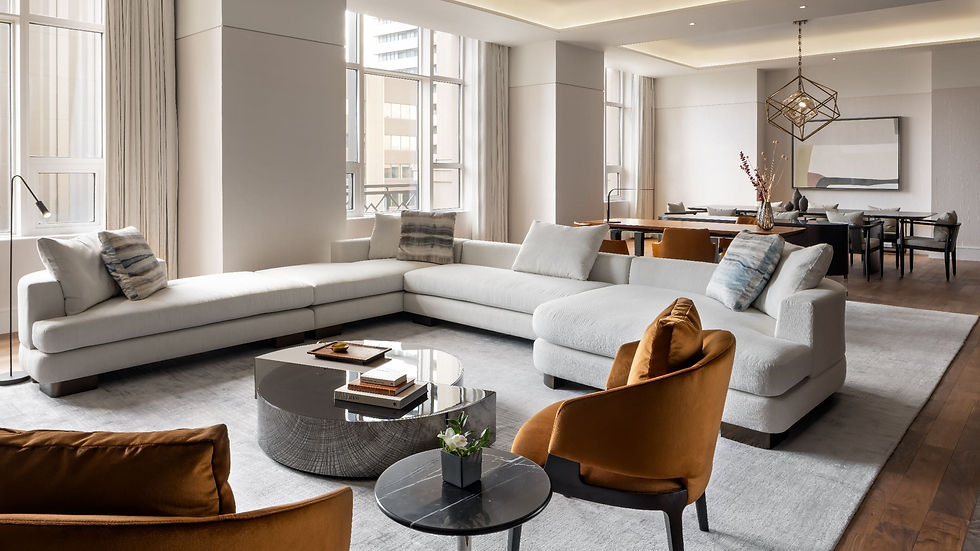
Studio Munge draws on the changing seasons and on artists’ studies of the Canadian landscape. These references shape a coordinated palette of colours, surfaces and forms, bringing the landscape’s variation into the scale of rooms and furniture.
Art as part of the public sequence
The hotel’s reopening announcement identifies a permanent collection that includes Canadian and Indigenous artists. Among its named works are An Te Liu’s Rendezvous sculpture and Shannon Bool’s Dead Ringers tapestry. The hotel’s own art resource further records the artists represented across the property, making authorship visible rather than treating art as an anonymous decorative category.

That visibility changes how the public rooms can be understood. Alongside material choices, artworks provide points of orientation and occasions to pause. They also give the setting a cultural specificity that a generic collection of neutral furnishings could not supply. The relationship between art and interior is strongest when both are credited and each retains a distinct voice.
A sequence adjusted through light
The lighting team’s account, published by Zaneen, describes reviewing proposed materials with the architects and interior designers to determine how surfaces and key moments should be illuminated. The apparent warmth and clarity of stone, timber and fabric depend on the way light is directed and balanced.

The Writers Room also preserves the idea of the hotel as a meeting place, with its name acknowledging a literary history. Across the redesigned rooms, the more durable achievement is the coordination of these layers: the architectural work, the material palette, the collection and the lighting. Park Hyatt Toronto demonstrates how an interior can change substantially while continuing to make sense as part of a place that people already know.
Global Directory
Explore Studio Munge in the icönik Global Directory.


Comments