Givenchy Fall/Winter 2024–2025: Parisian Restraint and a House in Transition

Givenchy Fall/Winter 2024–2025 reflected a house in transition, drawing on Parisian restraint, tailoring and archival identity while leaving space for a future creative direction. The collection’s value lies in the clarity of the wardrobe and the enduring strength of Givenchy’s elegant foundations.

The Strength of Restraint
Clean lines and controlled styling placed emphasis on silhouette rather than spectacle. In transitional moments, such restraint can reveal which house codes remain essential and which are open to reinterpretation.

The icönik View
Givenchy’s archive offers a powerful framework precisely because it combines elegance with sharpness. Fall/Winter 2024–2025 is best understood as a bridge — a reminder of those foundations before the next chapter takes shape.

Restraint reveals what belongs to Givenchy
Periods of creative transition can strip a house back to its most persistent codes. For Givenchy, clarity of line, black-and-white contrast, aristocratic polish and the meeting of severity with softness remain useful anchors. Fall/Winter 2024–2025 is most coherent when those elements are allowed to lead without excessive styling.

Transition can be productive
A house between major creative chapters does not need to manufacture a false revolution. It can use the interval to refine product, examine archives and identify which design principles still feel alive. This quieter work creates a stronger foundation for the next creative director than constant attempts to generate headline change.

Transition reveals which codes truly belong to Givenchy
Without a dominant new authorial statement, a house can examine what remains when recent styling is removed. For Givenchy, that includes clarity of line, black-and-white contrast, refined tailoring and a recurring tension between aristocratic polish and harder contemporary attitude. These elements offer a more durable foundation than copying a specific past creative director.

Restraint can create expectation
An interim collection does not need to pretend it has solved the future. A controlled wardrobe can be strategically useful because it stabilizes product, clarifies house values and creates visual space for the next major chapter. Fall/Winter 2024–2025 is best read in this context: less as a manifesto than as an exercise in identifying what Givenchy can carry forward with confidence.

How to plan the experience
Givenchy Fall/Winter 2024–2025 is most convincing when silhouette, material and movement tell the same story. Recurring proportions, fabric treatments and styling choices should create a recognizable rhythm, while accessories work best when they extend that rhythm rather than simply adding product. The decisions that endure are the ones that remain useful beyond the runway image: a way of cutting a jacket, handling volume, combining textures or changing how the body moves through clothes.

What distinguishes the experience
The wider influence of Givenchy Fall/Winter 2024–2025 will depend on which runway ideas translate without losing their character. A dramatic silhouette may remain a showpiece, while a color relationship, trouser proportion, surface treatment or accessory shape can move quickly into everyday wardrobes. Cultural impact rarely comes from literal copying; it comes from designers and wearers absorbing a visual principle and adapting it to another context.
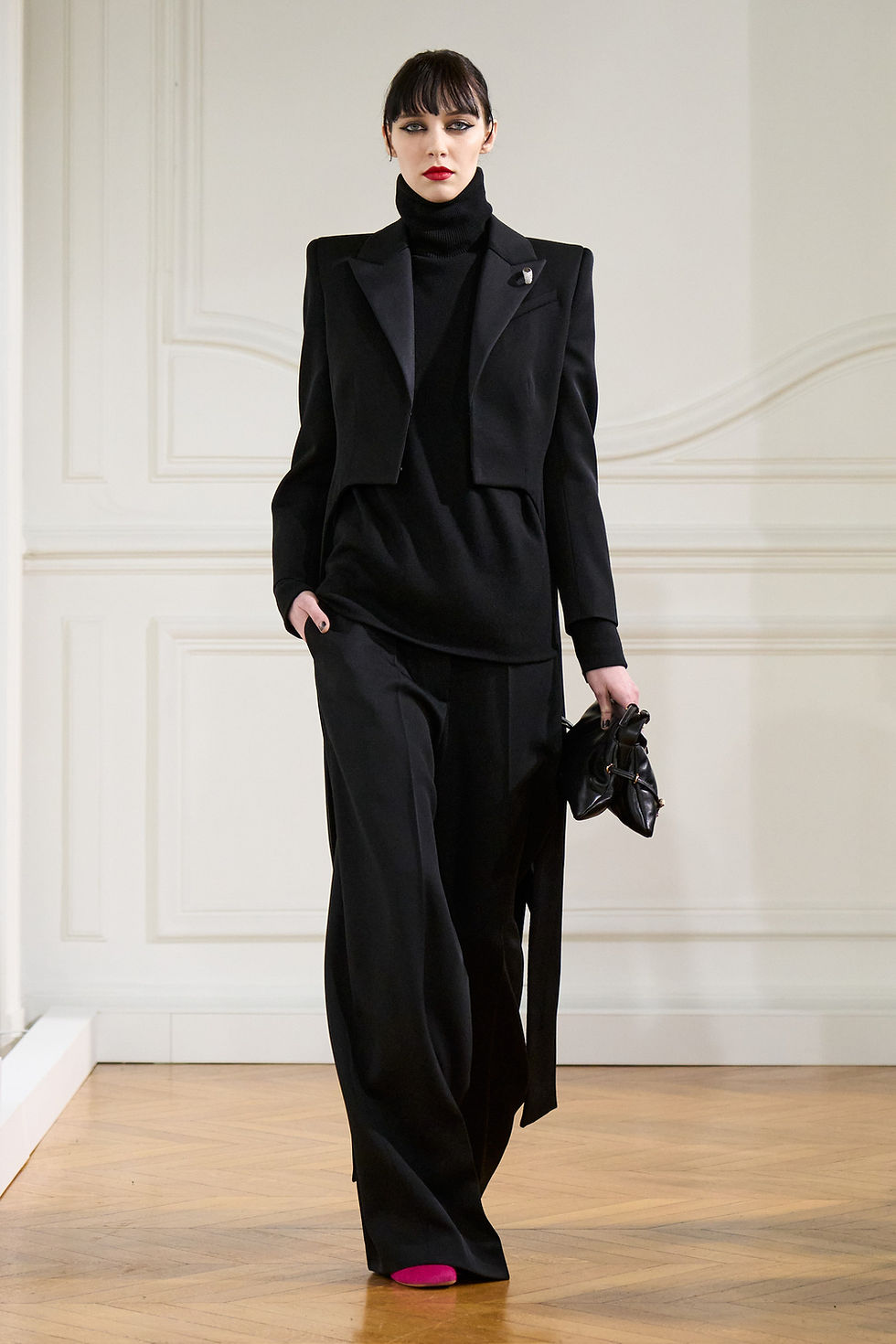
Transition can reveal what belongs to the house
Givenchy’s Fall/Winter 2024–2025 period is useful precisely because creative transition strips away some of the personality associated with a single director. What remains visible are recurring house strengths: precise tailoring, graphic contrast, restrained glamour and a tension between formality and ease. Those qualities provide a foundation for future change. A transition season does not need to manufacture a revolution if it can clarify the design vocabulary the next chapter inherits.


Comments