
Iris van Herpen: Fashion Meets Technology
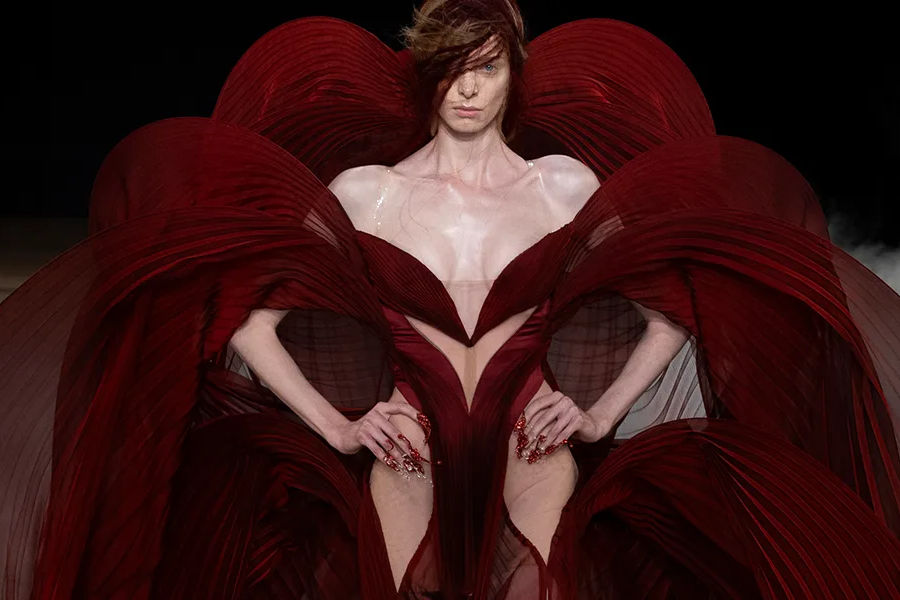
Iris van Herpen has made technology feel native to couture rather than added after the fact. Digital fabrication, unusual materials and scientific references are integrated with handwork, movement and an intense curiosity about the body.

Photo: Robin de Puy / Vogue Business.
Innovation as an atelier method
The designer’s work demonstrates that new tools do not have to replace craftsmanship. Instead, computation and fabrication can expand what craftspeople are able to build, especially when garments depend on complex geometry and precise lightweight structures.
Her influence reaches architecture, product design and art because the underlying question is larger than fashion: how can technology create forms that still feel alive and human?
Technology is a material, not a theme
Iris van Herpen’s work is most compelling when technology changes what a garment can physically do. Digital fabrication, unusual materials and experimental construction are not decorative references to the future; they become methods for producing form that would be difficult through conventional dressmaking alone.
The body remains central
Despite the technological language, Van Herpen’s silhouettes are deeply connected to movement. Pleating, translucent structures and articulated surfaces respond to breath and motion, preventing the work from becoming static sculpture. The body activates the garment and completes the design.
Collaboration expands the vocabulary
Her practice regularly intersects with architecture, science, engineering, music and art. These collaborations matter because they introduce processes fashion might not develop internally. The result demonstrates how couture can operate as a research platform, translating ideas between disciplines.

Photo: Gio Staiano / Iris van Herpen.
Why the work matters beyond couture
Van Herpen’s influence is visible in the growing willingness of fashion to engage with digital fabrication and biomimetic form. Not every experiment becomes commercial clothing, but the atelier functions as a laboratory. Luxury’s future depends partly on this capacity to test possibilities before they are ready for mass adoption.
Digital fabrication expands what couture structure can do
Iris van Herpen’s importance is not that technology replaces handwork. It is that computational design, laser cutting, additive manufacturing and unconventional fabrication can be combined with couture fitting to create forms traditional pattern cutting would struggle to produce alone. The body remains the reference point, but the path from concept to object changes. This makes the atelier a place where software, engineering and craft can inform one another rather than compete.
Innovation becomes meaningful when it changes movement
A visually futuristic material is not automatically good fashion. Van Herpen’s strongest work considers how a surface expands, flexes or responds as the wearer moves. The effect may recall water, wings, cellular structures or other natural systems, but the success lies in physical behavior rather than resemblance alone. This focus on motion is what keeps experimentation connected to clothing instead of allowing the garment to become a static technology demonstration.
Context and execution

Photo: Filippo Fior / Gorunway.com / Vogue.
Iris van Herpen is most convincing when silhouette, material and movement tell the same story. Recurring proportions, fabric treatments and styling choices should create a recognizable rhythm, while accessories work best when they extend that rhythm rather than simply adding product. The decisions that endure are the ones that remain useful beyond the runway image: a way of cutting a jacket, handling volume, combining textures or changing how the body moves through clothes.


Comments