The Best Shoes Seen During Couture Week
At haute couture, shoes are never merely the final accessory. They regulate posture, alter pace and determine how a silhouette meets the floor. During Paris Haute Couture Week for Fall/Winter 2026–2027, held from 6 to 9 July on the official Fédération de la Haute Couture et de la Mode calendar, the most persuasive footwear ideas ranged from vine-traced heels and exposed sandals to sculptural forms and deliberately quiet foundations.
This icönik edit is an editorial reading of runway and detail imagery, not a retail ranking. Couture shoes may be unique, adapted for a client, produced only for the show or unavailable commercially. The selections below therefore focus on design intelligence: the relationship between shoe and garment, the treatment of the foot, the geometry of the heel and the way footwear completes a house’s wider idea.

How to read shoes during couture week
A shoe can perform at least three different roles in couture. It can extend the narrative of a collection, as when a motif travels from embroidery to the heel. It can create tension by opposing the clothing’s volume. Or it can recede, allowing the movement of a skirt, train or draped surface to remain dominant. Judging footwear only as an isolated object misses the point; the most successful pairs clarify the whole silhouette.
Chanel: heels that carry the collection’s story
Chanel’s official Fall/Winter 2026 Haute Couture presentation describes a fairy-tale world in which flowers bloom across tweeds, magpies appear in braids and vines climb the heels. That last detail matters. Instead of treating footwear as a neutral base, the maison lets the botanical vocabulary descend all the way to the foot, turning the shoe into a continuation of the look rather than an afterthought.
The effect is visually light. Open, high-heel proportions expose the foot and create space beneath elaborate tailoring and romantic surface work. That openness prevents dense craft from appearing static. It also demonstrates a useful couture principle: ornament does not always need more mass. A fine line, a slim heel or a motif placed with precision can carry as much narrative power as a heavily embellished shoe.
Why the Chanel approach works
The footwear supports two apparently opposite qualities: fantasy and control. The vine detail belongs to the collection’s imaginative world, while the recognizable sandal structure gives the eye a stable point of reference. The result feels expressive without competing with the clothes. For styling beyond the runway, the lesson is proportion rather than imitation: a lighter shoe can give heavily textured eveningwear more air.
Schiaparelli: a new shoe from “The Call of the Void”
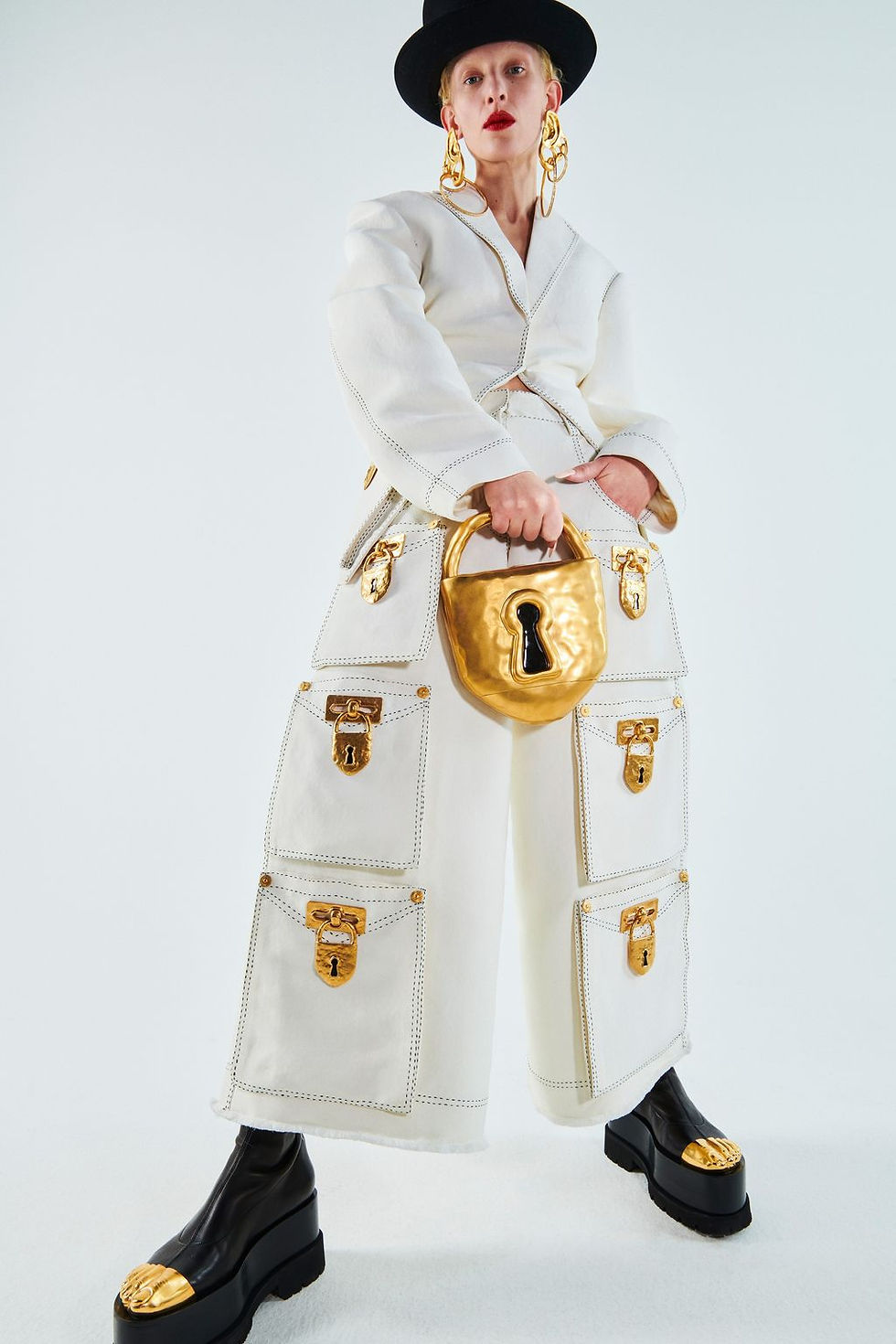
Schiaparelli’s official title for the Fall/Winter 2026–2027 collection is “The Call of the Void.” Daniel Roseberry’s text describes an experiment with materials that are unusual in haute couture, including latex, silicone and sheets of baked paint. The footwear belongs to the same investigation of transformation: familiar categories are made strange through surface, volume and an almost object-like presence.
The house specifically introduces The Bubble, described as an alien metallic shape fitted with a silicone sleeve. That combination makes it one of the clearest shoe statements of the week. Metal suggests hardness, reflection and permanence; silicone introduces flexibility, tactility and an association with the artificial body. The shoe is not simply decorated to look surreal. Its construction embodies the collection’s question about where value resides: in conventionally noble material, or in imagination and craft.
The Bubble as a complete couture object
Schiaparelli’s strongest footwear succeeds because it is legible from a distance and rewarding in detail. The metallic volume establishes a graphic silhouette, while the sleeve complicates its surface. It also connects directly to the collection’s sculpted bustiers, kinetic latex elements and experiments with nontraditional fabrication. Here, the shoe becomes character, sculpture and technical proposition at once.
Jean Paul Gaultier: a vertical counterweight to altered bodies
For Jean Paul Gaultier, Duran Lantink built the Fall/Winter 2026–2027 couture collection around distortion, displaced volume and controlled excess. The Fédération de la Haute Couture et de la Mode’s official report records 34 looks and describes sharply cut silhouettes, inflated effects, corsetry, jewel-like dresses and a continual play between masculine and feminine codes.
Within that environment, high heels operate as a vertical counterweight. They lengthen the line beneath bodies that appear expanded, compressed or reorganized. Their relative familiarity is useful: when the clothing challenges balance and anatomy, the heel gives the silhouette a known axis. It does not neutralize the experiment; it makes the experiment easier to read.
When a familiar archetype sharpens an unfamiliar silhouette
The lesson is that innovation does not require every component to become equally extreme. A recognizable high-heel structure can intensify radical clothing by providing contrast. This is especially effective in runway photography, where the eye needs a visual route from shoulder to floor. The shoe completes that route and keeps the collection’s distortions deliberate rather than chaotic.
Dior: restraint beneath sculptural material
Dior’s official Fall/Winter 2026–2027 Haute Couture presentation connects Jonathan Anderson’s collection to the work of American sculptor Lynda Benglis. Knotting, pleating, moulding and draping turn flat material into three-dimensional form, while references to Gujarat, Santa Fe and historic chintz expand the collection’s study of surface and place.
Against that complexity, the footwear visible in the runway imagery is comparatively restrained. This is not an absence of design; it is hierarchy. A quieter shoe lets hand-pleated, knotted and draped volumes remain the central event. It also protects the continuity of the silhouette, particularly when hems, gathered surfaces or sculptural shapes already introduce multiple visual directions.
The sophistication of letting the shoe recede
Couture styling depends on knowing where to stop. Dior’s approach demonstrates that the best footwear decision may be the one that preserves movement and material clarity. A shoe can support the line of a dress without demanding an independent narrative. For clients and stylists, that restraint is often the most transferable runway lesson: when the garment carries the concept, the shoe should secure proportion, posture and ease.
Four footwear ideas that defined Fall 2026 couture
Narrative continuity: Chanel showed how a motif can travel from the garment to the heel without making the look feel heavy.
Material transformation: Schiaparelli’s The Bubble turned metallic form and a silicone sleeve into a coherent couture object.
Proportional contrast: Jean Paul Gaultier used the familiar verticality of heels to sharpen radically altered volumes.
Strategic restraint: Dior demonstrated that a quieter shoe can protect the movement and sculptural logic of the clothes.
What can move from runway to wardrobe
The couture runway offers principles rather than shopping instructions. With voluminous gowns, consider a shoe that exposes more of the foot or uses a finer line. With minimal clothing, a sculptural shoe can become the central object. When an outfit already contains strong texture, unusual material and complex construction, visual restraint at the foot can make the full look more convincing. The common thread is intentionality: footwear should answer the clothes, not merely match their colour.
Practical questions still matter. Heel height, stability, hem clearance and the surface on which a client will walk can change the right choice. Because couture versions may differ from commercial products, materials, availability and made-to-order options should always be confirmed directly with the relevant maison.
Related reading
Continue with icönik’s CHANEL Haute Couture Fall/Winter 2026–2027 review and Zuhair Murad Fall 2026 Couture review.
Conclusion: the best couture shoes complete an argument
Fall 2026 couture did not produce one dominant shoe shape. Its stronger message was more useful: footwear earns attention when it resolves the logic of a look. Chanel extended narrative into the heel; Schiaparelli transformed material into a surreal object; Jean Paul Gaultier used verticality to discipline distortion; Dior chose restraint beneath sculptural cloth. Different answers, but the same standard — the shoe must make the silhouette more articulate.
Editorial note: this selection is based on official collection material and runway imagery. It distinguishes documented house descriptions from icönik’s visual analysis; it does not assert commercial availability.


Comments