Schiaparelli Haute Couture: Surrealism, Craft and Modern Fantasy
Updated: 2 days ago
The impossible, made wearable
Schiaparelli couture is most compelling when it makes a difficult question look deceptively simple: how can a garment be both wearable and impossible? Under Daniel Roseberry, the house has answered with exaggerated anatomy, sculptural tailoring, surrealist jewelry and techniques that make fabric behave like metal, bone or machinery.
The work is often described as theatrical, but theater alone does not explain its force. The shock depends on balance, proportion, finish and the quiet competence of an atelier capable of turning an image that should remain on paper into something stable enough to move through a room. A false torso must not collapse into a joke. A monumental peplum must remain a silhouette. A jewel shaped like a body part must alter the wearer’s presence rather than simply decorate it.
Elsa Schiaparelli’s legacy without literal repetition

Elsa Schiaparelli established the house’s relationship with surrealism in the 1930s through designs that treated fashion as a field of wit, illusion and visual contradiction. Her work questioned the presumed boundaries of the body. A garment could suggest an eye, a skeleton, a drawer, a tear or an impossible anatomy; clothing did not merely cover the body but invented another one around it.
Roseberry’s task has been to continue that spirit without producing a museum version of Schiaparelli. He works with recognizable echoes—anatomical motifs, trompe-l’œil effects, sculptural shoulders, displaced closures and playful accessories—but places them within the demands of contemporary couture and a global culture of celebrity image-making.
The result is not historical imitation. It is an argument that surrealism remains useful when it is treated as a method rather than a motif: a way to make the familiar unstable.
Spring 2025 and the ambition of Icarus
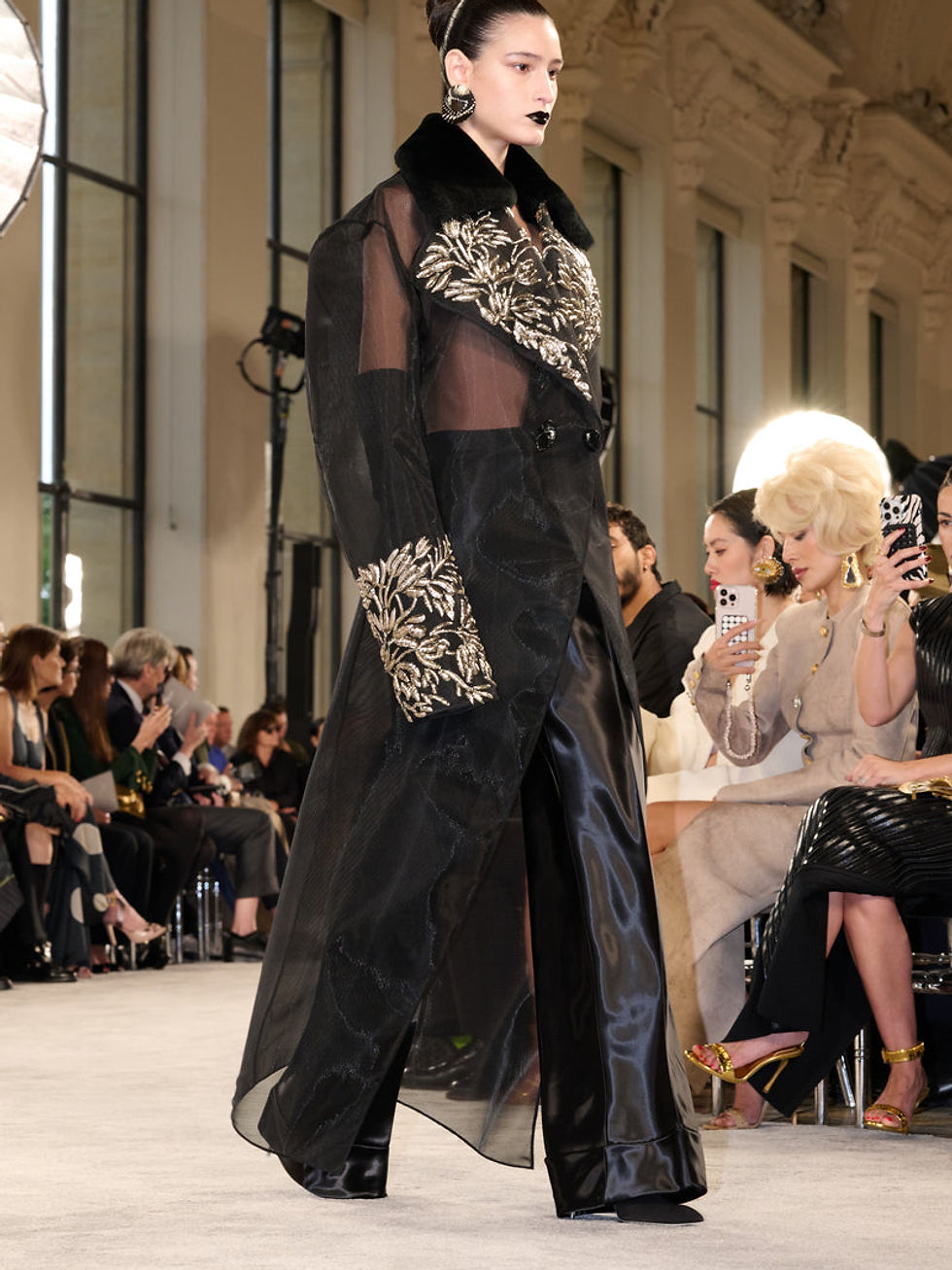
Roseberry titled the Spring 2025 Haute Couture collection Icarus, invoking the myth of ambition, risk and flight. The collection did not illustrate the story with literal wings or suns. Instead, it translated the myth into a technical challenge: how far could couture push beyond the contemporary assumption that modernity must be simple?
The answer came through garments that appeared almost engineered. A wavy, three-dimensional peplum rose from a strapless bustier. A one-shoulder velvet dress carried an architectural flounce. A cream cutaway tail jacket suggested an aircraft fuselage, an engineered shell or a surrealist rib cage.
The forms looked smooth and industrial, but their construction depended on older couture methods. Neoprene and Ultrasuede helped support the shapes, while handwork preserved the irregularity and intelligence of atelier labor. The tension was central: the garments seemed machine-made from a distance, yet became more intriguing when one imagined the hands required to build them.
Antique ribbons and the authority of age
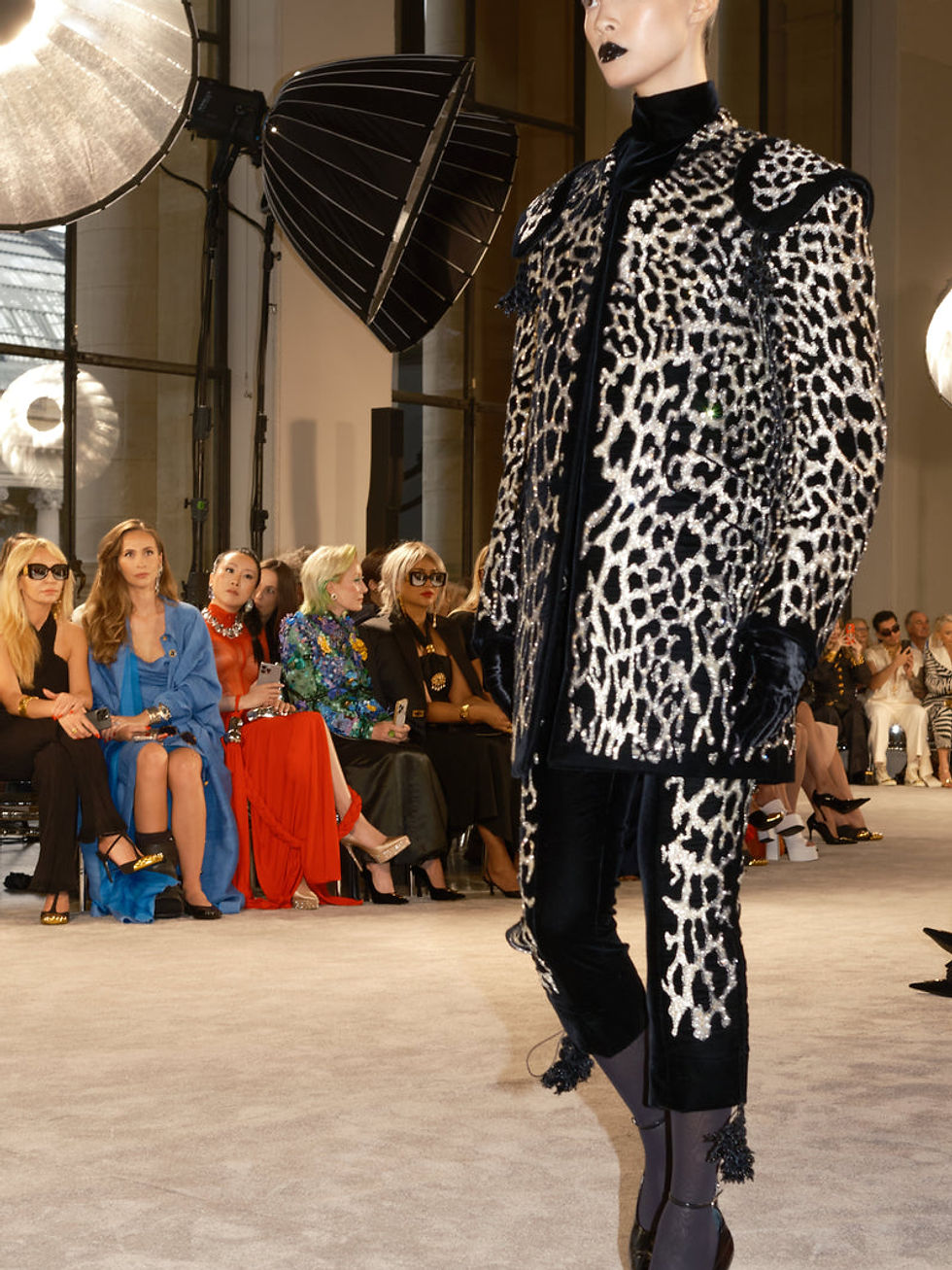
The collection’s most persuasive idea began with a box of early twentieth-century Lyon couture ribbons found in an antique shop. Many had been produced in the 1920s and 1930s, before the war interrupted the networks through which such materials were made and distributed.
Roseberry used the ribbons as active material rather than precious relic. A brown moiré silk ribbon shaped the final corseted dress. Another slim dress was formed from vertical tiers that shimmered and quivered as the model walked. The effect suggested the lightness of a 1920s flapper dress without becoming period costume.
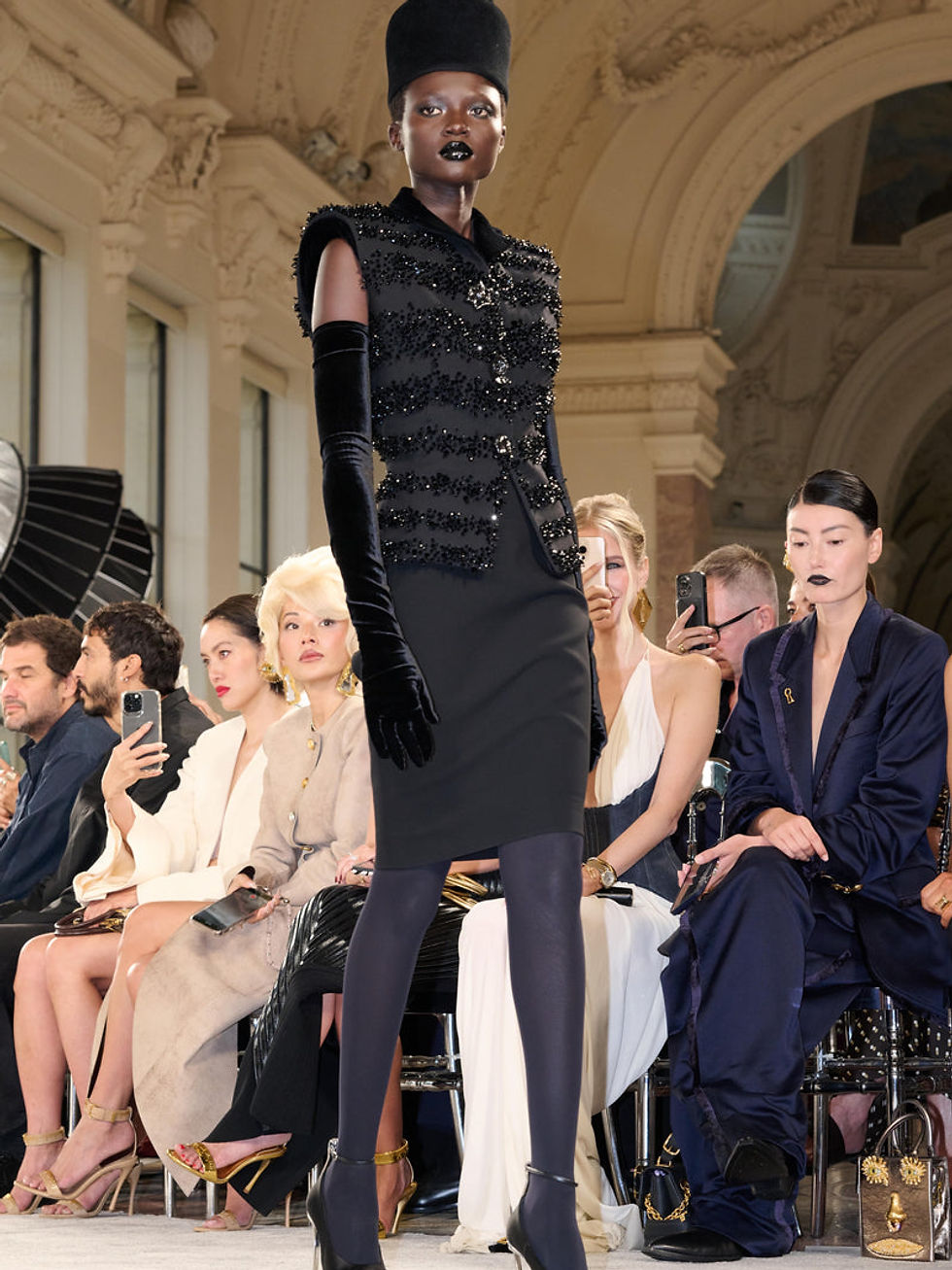
This is one of couture’s difficult achievements: allowing the past to remain visible while making the result impossible to confuse with reproduction. The historical reference is carried through texture, color and movement rather than explanation. The ribbons retain their age, but the garments give that age a new body.
The house’s anatomy
Schiaparelli’s contemporary vocabulary often begins with the body. Eyes, ears, hands, ribs, hearts and torsos appear as jewelry, embroidery, closures and sculptural details. These references could easily become gimmicks, but the house is strongest when anatomy is integrated into construction.
An anatomical motif changes the wearer’s relationship to the garment. A false spine implies another structure beneath the back. A heart at the nape creates an emotional center outside the chest. A breast-shaped ornament or displaced torso suggests that clothing is not merely covering the person but producing an alternative anatomy around her.

That logic was especially visible in Roseberry’s Fall 2025 Couture work, including a red satin dress with a false torso and breasts at the back, accompanied by a red rhinestone heart necklace below the nape. The effect was not simply provocative. It reorganized the viewer’s understanding of where the body begins and ends.
Fall 2025: history on the precipice
Roseberry’s Fall 2025 collection looked toward the period before the Second World War, when Elsa Schiaparelli established herself in Paris amid political and cultural instability. The show’s historical reference was not a literal political costume. It was a mood of elegance under pressure, a sense that refinement could become more intense when the surrounding world felt unstable.

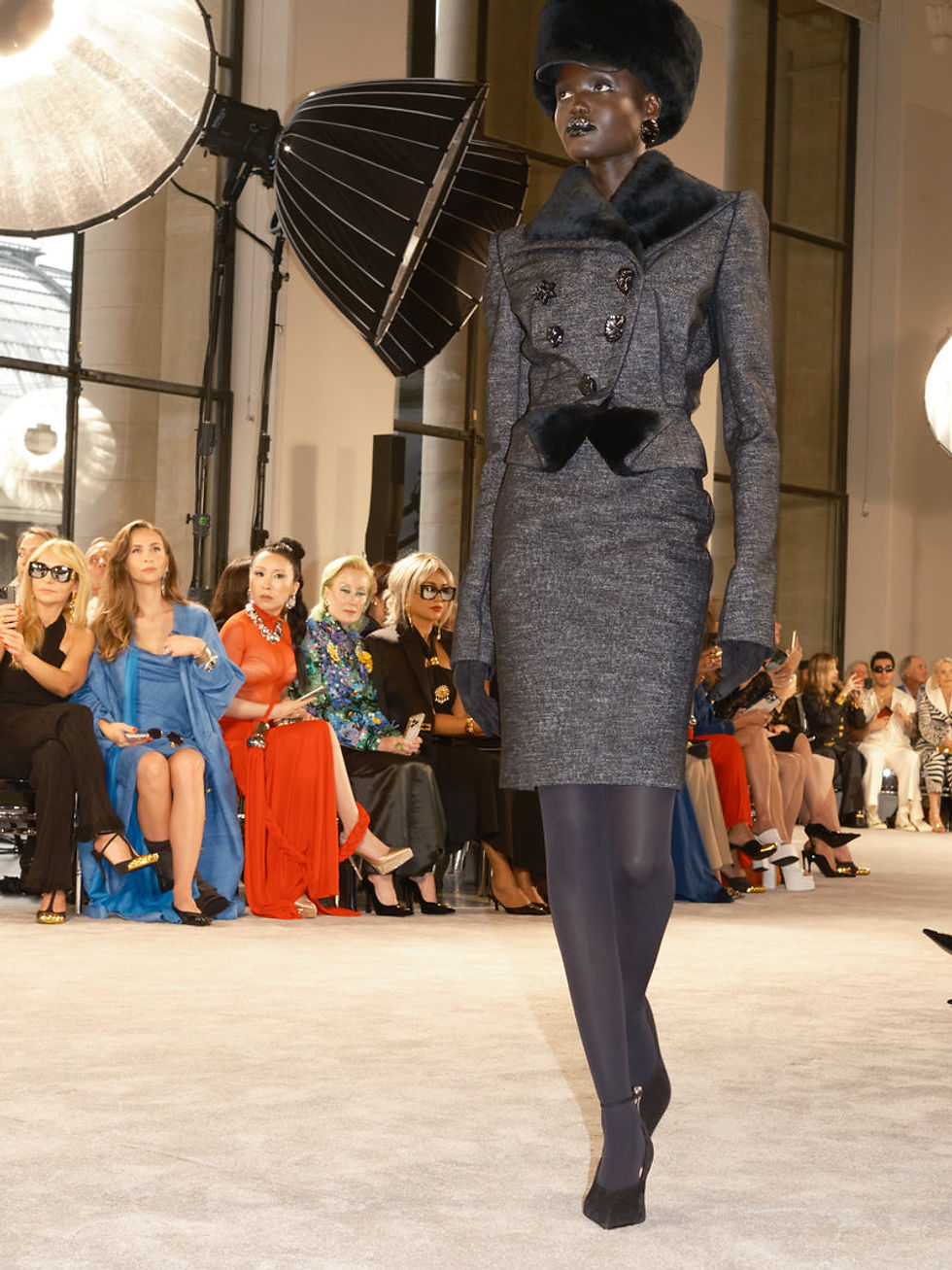
The collection opened and closed with references to Elsa’s work, including a black skirt suit and a rendering of the Apollo cape. The cape was worn back to front, turning archival memory into a contemporary reversal. That gesture captured Roseberry’s method: respect the original object, then shift its logic.
The proportions also changed. The designer moved away from constant corsetry toward bias-cut eveningwear, soft tailoring and 1930s-inspired satin. The result was a different kind of sensuality—less armored, more fluid and no less exact.
Surrealism through restraint
The most surprising aspect of Fall 2025 was not its most spectacular pieces but its restraint. Black tulle softened a Donegal tweed suit. A black polka-dot tailored look appeared almost sheer at close range. Bias-cut trouser suits combined softness with authority.
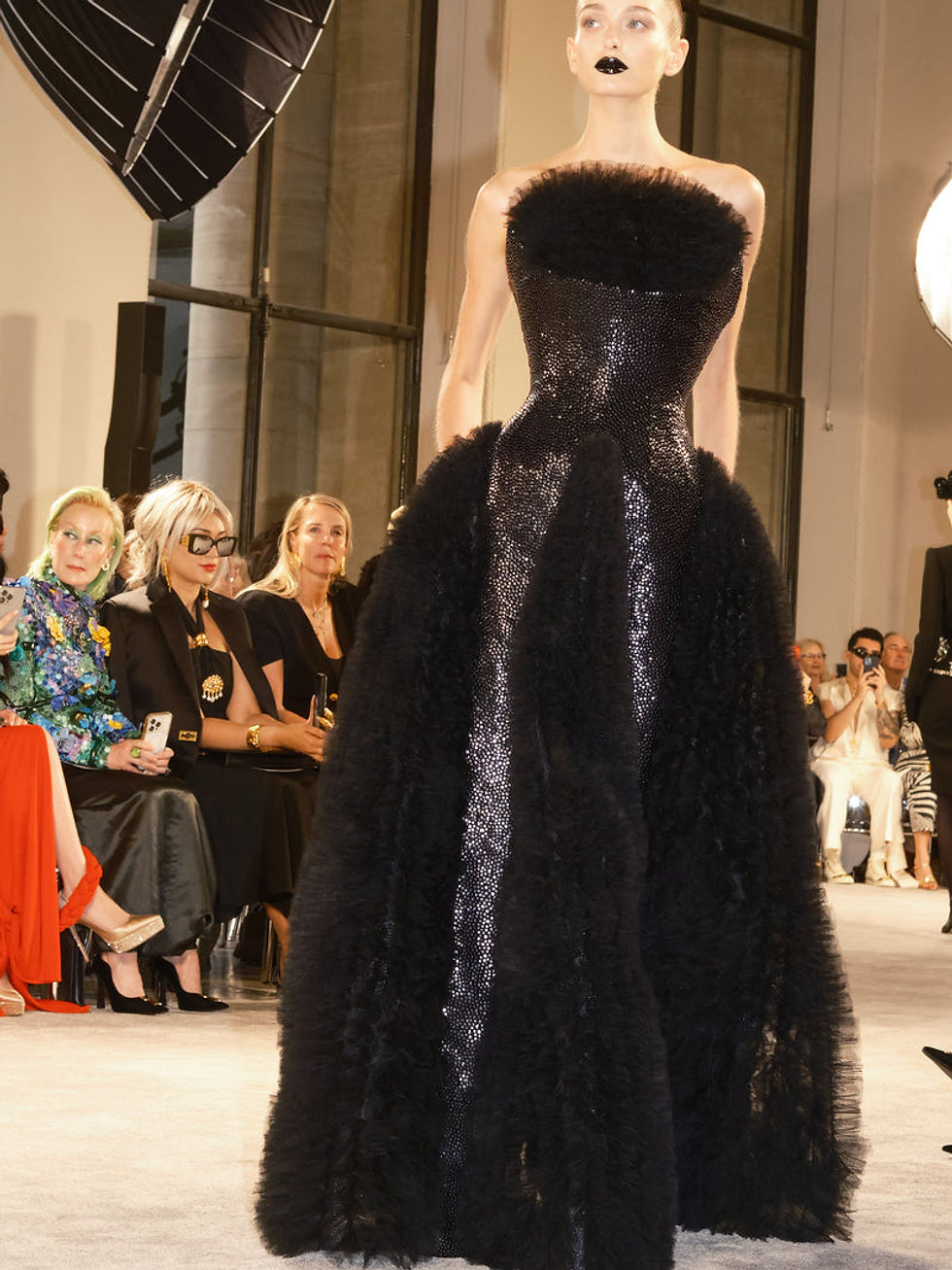
These clothes demonstrated that Schiaparelli does not require a visible anatomical object in every look to remain surrealist. Surrealism can operate through reversal, proportion, transparency and visual uncertainty. A familiar suit becomes strange when its solidity is interrupted. A classic satin dress feels contemporary when its movement destabilizes the body beneath it.
This restraint also gave the more extravagant pieces greater force. When every look is a climax, nothing is. Schiaparelli’s strongest collections understand rhythm.
The celebrity translation
Schiaparelli’s cultural visibility has been amplified by celebrities who understand its theatrical vocabulary. Kim Kardashian’s 2023 Met Gala look, built with more than 50,000 pearls, translated the house’s affinity with body-conscious spectacle into a globally photographed event. In 2025, Ariana Grande wore a Schiaparelli look from the Spring 2025 collection to the Academy Awards, where its crystal-covered tulle and sculptural volume connected runway fantasy to the visual mythology of Wicked.
These appearances are not incidental to the contemporary brand. They show what happens when Schiaparelli leaves the controlled environment of the runway. The challenge is to preserve conceptual force while allowing the wearer’s personality to remain visible.
The best celebrity appearances do not flatten the house into “red-carpet drama.” They give the drama a human context. The garment becomes part of a performance, but it does not swallow the performer.
The atelier behind the illusion
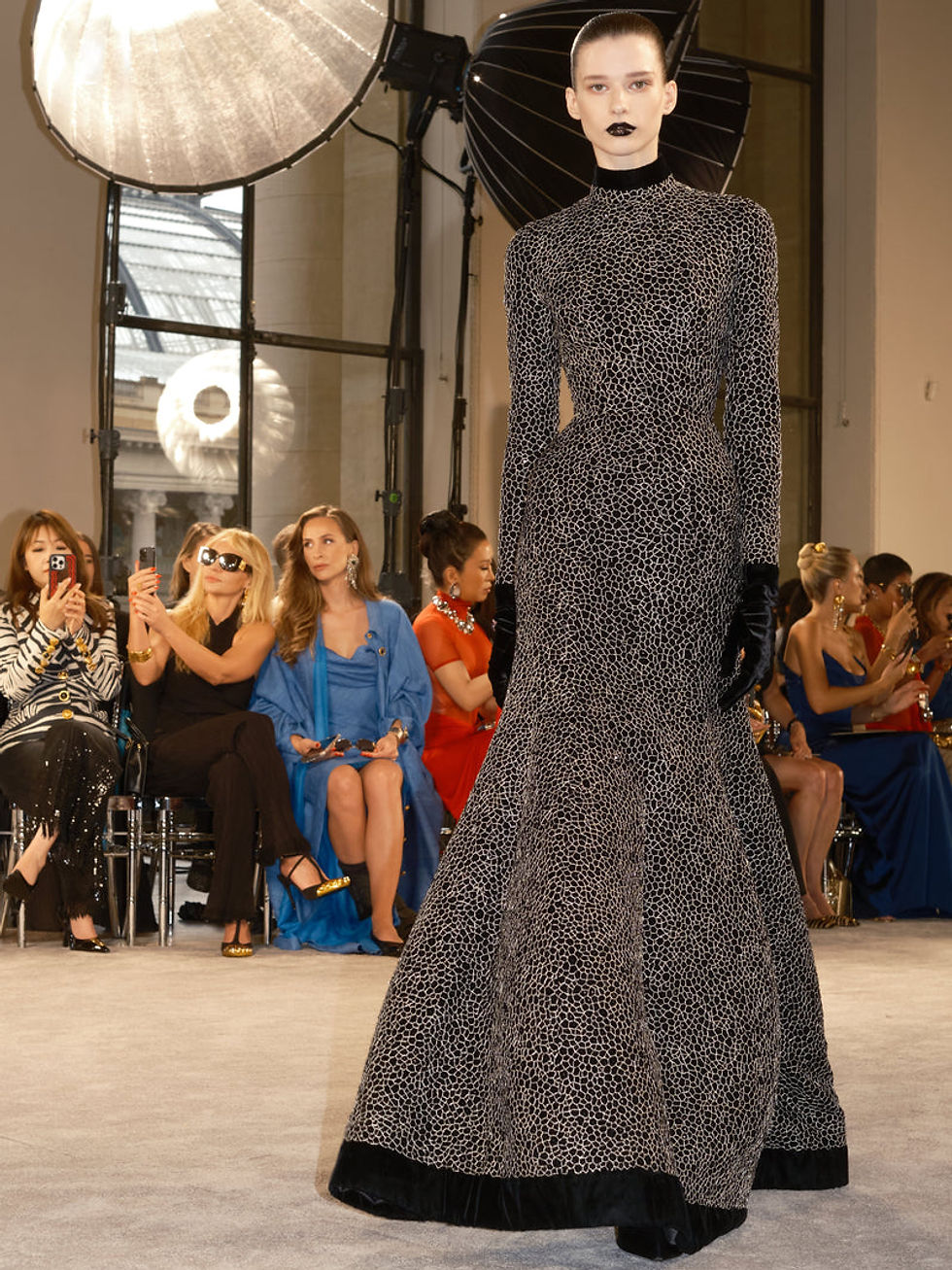
Schiaparelli’s visual impact can obscure its technical complexity. A sculpted peplum must remain balanced on the body. A false torso must look intentional rather than cumbersome. Embroidery must hold its shape, and jewelry must move without losing its illusion.
Couture is therefore a chain of negotiations between drawing, material, body and labor. Roseberry’s designs ask the atelier to make fantasy stable enough to wear. That process explains why the clothes often look more convincing in motion than in a static image. Walking activates the construction; the construction changes the body’s apparent scale.
The atelier is not a backstage footnote. It is the mechanism that makes Schiaparelli’s surrealism credible.

Why Schiaparelli matters now
Schiaparelli’s contemporary success comes from the clarity of its proposition. The house believes fashion can still surprise, and it treats craftsmanship as the mechanism that makes surprise believable. Its strongest collections do not choose between beauty and strangeness. They make beauty strange through an unexpected line, a displaced body part, an antique ribbon or a familiar suit turned inside out.
Under Roseberry, couture becomes visual theater, but it is theater built by hand. That is the enduring achievement of the recent house: the clothes do not ask to be admired only for their spectacle. They ask the viewer to wonder how the impossible was made wearable—and why the body looks newly alive once it is.


Comments