100 Emerging Luxury Fashion Designers
Updated: Aug 28
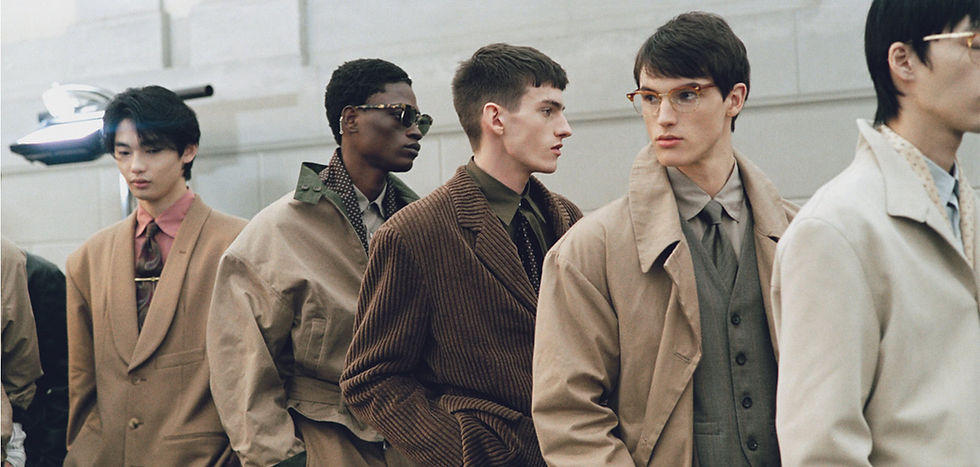
Top 100 Emerging Luxury Fashion Designers
A new generation of designers is transforming the meaning of luxury.
While established maisons continue to shape the international fashion calendar, independent talents are introducing fresh perspectives built around artisanal craftsmanship, cultural identity, experimental silhouettes, responsible production and highly personal storytelling.
From London and Paris to Tokyo, Stockholm, Lagos, New York, Shanghai and Copenhagen, these creatives are developing distinctive fashion languages capable of influencing the industry's next chapter.
Some have received recognition from influential platforms such as the LVMH Prize, the ANDAM Fashion Awards, the CFDA/Vogue Fashion Fund and Fashion East. Others have built momentum through independent runway presentations, celebrity placements, international retailers or exceptional technical work. The LVMH Prize, for example, is open to designers aged between 18 and 40 who have produced at least two ready-to-wear collections, making it an important international platform for identifying younger creative businesses. (lvmhprize.com)
The following Icönik Magazine selection presents 100 real emerging luxury fashion designers whose work deserves global attention.
How the Top 100 Emerging Luxury Fashion Designers Were Selected
This editorial selection considers designers at different stages of the emerging and next-generation luxury landscape.
The principal criteria include:
Originality and strength of creative identity
Quality of craftsmanship and construction
Recent runway, showroom or editorial visibility
International industry recognition
Cultural and artistic relevance
Potential for long-term brand development
Responsible approaches to materials and production
Influence on contemporary fashion conversations
Ability to create a recognizable visual universe
Contribution to a more international and inclusive luxury industry
Recognition from talent initiatives was considered, but inclusion was not limited to award winners. Recent LVMH Prize selections have featured designers working across Asia, Africa, Europe, the Middle East and the Americas, while the CFDA and Fashion East continue to support new talent in the United States and Britain. (lvmhprize.com)
Top 100 Emerging Luxury Fashion Designers to Watch
1. Soshi Otsuki — SOSHIOTSUKI — Tokyo, Japan
Soshi Otsuki reinterprets traditional Japanese tailoring through the visual language of contemporary menswear. His precisely constructed silhouettes explore the relationship between the Japanese salaryman uniform, ceremony and modern elegance. Otsuki received the 2025 LVMH Prize, confirming his growing international influence.
2. Steve O Smith — London, United Kingdom
Steve O Smith is known for transforming expressive fashion illustrations into garments. His fluid black lines, cut panels and layered constructions create the impression that hand-drawn sketches have moved directly from paper onto the body.
3. Torishéju Dumi — Torishéju — London, United Kingdom
British-Nigerian-Brazilian designer Torishéju Dumi combines sculptural draping, historical references and spiritual symbolism. Her work presents a dramatic and deeply personal interpretation of contemporary luxury.
4. Ellen Hodakova Larsson — Hodakova — Stockholm, Sweden
Ellen Hodakova Larsson creates refined womenswear from existing garments and discarded materials. Her transformation of belts, buttons, tailoring and traditional wardrobe pieces demonstrates how circularity can become a sophisticated luxury design language. Hodakova won the 2024 LVMH Prize. (lvmhprize.com)
5. Duran Lantink — Amsterdam, Netherlands
Duran Lantink is celebrated for exaggerated proportions, reconstructed garments and surreal body-conscious silhouettes. His work challenges conventional ideas of beauty while bringing theatrical experimentation into the contemporary luxury market.
6. Michael Stewart — Standing Ground — London, United Kingdom
Irish designer Michael Stewart approaches eveningwear through sculptural draping and elongated silhouettes. Standing Ground has become recognized for dresses that appear simultaneously minimal, sensual and architectural.
7. Jacques Agbobly — Agbobly — New York, United States
Togolese-American designer Jacques Agbobly brings West African cultural narratives into expressive American luxury fashion. Their work explores identity, family, migration, color and community through highly personal collections.
8. Paolo Carzana — London, United Kingdom
Paolo Carzana creates delicate garments that appear weathered, hand-treated and emotionally charged. His collections are shaped by natural dyes, fragile layering and an almost poetic vision of beauty.
9. Conner Ives — London, United Kingdom
American designer Conner Ives combines nostalgia, upcycling and observations of contemporary culture. His collections transform familiar garments and archetypes into polished pieces with a distinctive storytelling quality.
10. Sinéad O’Dwyer — London, United Kingdom
Sinéad O’Dwyer challenges traditional fashion proportions through body-inclusive casting and highly technical stretch constructions. Her work places diverse bodies at the center of luxury design rather than treating inclusivity as an afterthought.
11. Aaron Esh — London, United Kingdom
Aaron Esh brings romanticism and cinematic elegance to contemporary menswear. His softly tailored coats, sensual evening pieces and precise silhouettes reflect a refined interpretation of modern London style.
12. Chet Lo — London, United Kingdom
Chet Lo is best known for his distinctive spiked knitwear and body-conscious silhouettes. His designs combine technical textile experimentation with a futuristic, immediately recognizable visual identity.
13. Karoline Vitto — London, United Kingdom
Brazilian designer Karoline Vitto celebrates the body through curved metal structures, fitted dresses and precisely placed cutouts. Her work explores sensuality through construction rather than exposure alone.
14. Feben Vemmenby — Feben — London, United Kingdom
Ethiopian-Swedish designer Feben Vemmenby creates tactile garments informed by migration, identity and lived experience. Her twisted textiles, vibrant surfaces and sculptural silhouettes have established a distinctive presence in London fashion.
15. Tolu Coker — London, United Kingdom
British-Nigerian designer Tolu Coker uses fashion as a platform for social commentary and cultural documentation. Her collections connect tailoring, family histories, youth culture and the experiences of diasporic communities.
16. Jawara Alleyne — London, United Kingdom
Born in Jamaica and raised in the Cayman Islands, Jawara Alleyne creates deconstructed clothing influenced by Caribbean identity, movement and resourcefulness. Draping and unconventional fastening techniques are central to his practice.
17. Saul Nash — London, United Kingdom
Saul Nash merges performance, dance and technical menswear. His garments are designed around movement, making the relationship between the body and clothing an essential part of every collection.
18. Priya Ahluwalia — Ahluwalia — London, United Kingdom
Priya Ahluwalia explores her British, Indian and Nigerian heritage through textiles, tailoring and research-led storytelling. Her collections frequently incorporate recycled materials and references to music, migration and family archives.
19. Dilara Fındıkoğlu — London, United Kingdom
Turkish designer Dilara Fındıkoğlu creates provocative collections that merge corsetry, historical dress, rebellion and dark romanticism. Her highly detailed work has developed a strong following across fashion and celebrity culture.
20. Emma Chopova — Chopova Lowena — London, United Kingdom
Bulgarian-American designer Emma Chopova co-founded Chopova Lowena, a label recognized for its energetic combination of folkloric references, sportswear, metal hardware and intricate textile work.
21. Laura Lowena — Chopova Lowena — London, United Kingdom
British designer Laura Lowena works alongside Emma Chopova to develop the label's distinctive collision of heritage craftsmanship and subcultural styling. Their pleated, carabiner-fastened skirts have become a contemporary fashion signature.
22. Stefan Cooke — London, United Kingdom
Stefan Cooke investigates familiar menswear garments through innovative textile techniques, trompe-l'œil surfaces and cutout constructions. His work balances conceptual design with wearable wardrobe pieces.
23. Jake Burt — Stefan Cooke — London, United Kingdom
Jake Burt is the co-designer behind Stefan Cooke. His collaborative approach contributes to the label's exploration of British identity, decorative techniques and modern menswear.
24. Edward Cuming — Madrid, Spain
Australian designer Edward Cuming creates fluid, tactile clothing with an emphasis on fabric manipulation and relaxed construction. His work often transforms conventional wardrobe pieces through unexpected proportions.
25. Kiko Kostadinov — London, United Kingdom
Bulgarian designer Kiko Kostadinov has built a recognizable universe around technical construction, utilitarian details and unconventional color combinations. His work continues to influence the direction of experimental menswear.
26. Meryll Rogge — Antwerp, Belgium
Meryll Rogge combines Belgian design intelligence with a playful interpretation of familiar clothing. Her collections frequently shift between polished tailoring, domestic references and deliberately unexpected styling. Rogge received the 2025 ANDAM Grand Prize. (andam.fr)
27. Alain Paul — Alainpaul — Paris, France
Former professional dancer Alain Paul brings movement and choreography into his approach to fashion. His sharply constructed collections examine the discipline, vulnerability and physical language of the performing body.
28. Burc Akyol — Paris, France
French-Turkish designer Burc Akyol creates sensual tailoring that moves between masculine and feminine codes. Fluid eveningwear, exposed skin and refined construction form the foundation of his sophisticated aesthetic.
29. Sarah Levy — Paris, France
Sarah Levy transforms unexpected objects and unconventional materials into fashion accessories and wearable structures. Her experimental approach challenges assumptions about value, materiality and luxury craftsmanship.
30. Ester Manas — Ester Manas — Brussels, Belgium
Ester Manas co-founded a size-inclusive label built around adaptable construction, gathered fabrics and sensual silhouettes. Her work proposes a luxury wardrobe that responds to bodies rather than demanding that bodies conform to clothing.
31. Balthazar Delepierre — Ester Manas — Brussels, Belgium
Balthazar Delepierre works with Ester Manas to develop the label's innovative adjustable garments. Together, they combine technical experimentation with an inclusive and emotionally engaging vision of fashion.
32. Julie Kegels — Antwerp, Belgium
Julie Kegels brings an offbeat cinematic quality to womenswear. Her collections explore femininity through layered styling, lingerie references, unusual color combinations and carefully constructed characters.
33. Zane Li — Lii — New York, United States
Chinese designer Zane Li creates restrained, intelligent clothing influenced by corporate uniforms and everyday systems of dress. His subtle adjustments to construction give apparently simple pieces a distinctive conceptual depth.
34. Petra Fagerström — Stockholm, Sweden
Petra Fagerström is known for experimental draping, asymmetric construction and the use of deadstock textiles. Her collections combine Scandinavian clarity with a softer and more intuitive approach to form.
35. Harry Pontefract — Ponte — London, United Kingdom
Harry Pontefract explores personal identity through expressive silhouettes and highly considered construction. His work sits between conceptual menswear, performance and emotionally driven fashion.
36. Gabriel Figueiredo — De Pino — São Paulo, Brazil
Gabriel Figueiredo develops a sensual interpretation of Brazilian fashion through draping, tailoring and fluid silhouettes. His work brings local cultural references into an increasingly international luxury conversation.
37. Galib Gassanoff — Institution — Paris, France
Azerbaijani-born designer Galib Gassanoff combines textile knowledge, cultural memory and sophisticated construction. His work frequently draws attention to craftsmanship and the emotional value of garments.
38. Daniel del Valle — TheVxlley
Daniel del Valle develops experimental fashion through dramatic shapes, conceptual storytelling and an independent perspective. His work reflects the increasingly global nature of emerging luxury.
39. Anil Padia — Yoshita 1967 — India
Anil Padia presents a contemporary vision of Indian design rooted in craft and precise construction. His work connects regional knowledge with a modern international wardrobe.
40. Colleen Allen — New York, United States
Colleen Allen creates romantic womenswear informed by historical garments, fantasy and meticulous detailing. Her collections combine corsetry and decorative craftsmanship with a contemporary New York sensibility.
41. Ashlynn Park — Ashlyn — New York, United States
South Korean designer Ashlynn Park is recognized for architectural pattern cutting and disciplined elegance. Her garments balance controlled volume, Japanese-influenced precision and understated luxury.
42. Julian Louie — Aubero — New York, United States
Julian Louie creates thoughtful menswear shaped by tailoring, material research and a quiet sense of individuality. His work offers a refined alternative to logo-driven luxury.
43. Bach Mai — New York, United States
Vietnamese-American designer Bach Mai brings couture construction into dramatic contemporary eveningwear. Voluminous skirts, corseted shapes and expressive fabrics define his glamorous approach.
44. Bernard James — New York, United States
Bernard James creates fine jewelry and lifestyle objects inspired by family, intimacy and community. His designs demonstrate how emerging luxury can extend beyond clothing into a complete creative universe.
45. Taylor Thompson — 5000 — New York, United States
Taylor Thompson approaches fashion through concept-driven wardrobe pieces and precise visual storytelling. His label 5000 reflects a thoughtful understanding of contemporary American design.
46. Rachel Scott — Diotima — New York, United States
Jamaican designer Rachel Scott combines hand-crochet techniques, tailoring and Caribbean cultural references. Diotima has emerged as an important example of craft-centered contemporary luxury.
47. Daniella Kallmeyer — Kallmeyer — New York, United States
South African-born designer Daniella Kallmeyer offers a refined wardrobe of relaxed tailoring and understated separates. Her work is distinguished by intelligent proportions and modern confidence.
48. Christopher John Rogers — New York, United States
Christopher John Rogers is known for saturated color, dramatic volume and exuberant occasion dressing. His work brings joy and theatricality to American luxury while maintaining exceptional technical control.
49. Grace Ling — New York, United States
Singapore-born Grace Ling combines fashion with digital technology and sculptural design. Her polished garments and metal accessories present a futuristic but highly refined vision of the body.
50. Meruert Tolegen — New York, United States
Kazakh designer Meruert Tolegen creates romantic garments marked by sculptural tailoring, historical references and controlled volume. Her collections present femininity as both delicate and commanding. She was among the 2025 LVMH Prize semifinalists. (lvmhprize.com)
51. David Boye-Doe Kusi — Boyedoe — Accra, Ghana
David Boye-Doe Kusi uses reconstructed tailoring and textile experimentation to explore African identity and contemporary masculinity. His work contributes to Ghana's growing international fashion presence.
52. Josh Tafoya — United States
Josh Tafoya draws on Indigenous textile traditions, regional landscapes and American craft. His collections emphasize material knowledge, cultural memory and responsible production.
53. Ahmed Hassan — KML — Egypt
Ahmed Hassan develops modern clothing informed by Egyptian identity and a minimalist approach to form. His work represents the growing visibility of independent Middle Eastern luxury designers.
54. Sigurd Bank — Mfpen — Copenhagen, Denmark
Sigurd Bank creates understated menswear that refines traditional wardrobe pieces through proportion, fabric and subtle construction. Mfpen represents a more responsible and quietly luxurious side of Scandinavian design.
55. Nicklas Skovgaard — Copenhagen, Denmark
Nicklas Skovgaard is recognized for hand-developed textiles, dramatic dresses and romantic silhouettes. His work combines Nordic restraint with theatrical surface and movement.
56. Xiang Gao — Penultimate — China
Xiang Gao creates conceptual garments with experimental proportions and a strong emphasis on visual narrative. Penultimate contributes to the new generation of internationally visible Chinese design labels.
57. Ryota Murakami — Pillings — Tokyo, Japan
Ryota Murakami approaches knitwear with humor, emotion and an appreciation for imperfection. His handcrafted pieces often transform familiar domestic textures into expressive luxury fashion.
58. Cynthia Merhej — Renaissance Renaissance — Beirut and Paris
Cynthia Merhej draws on generations of family dressmaking knowledge to create poetic and carefully constructed womenswear. Her collections connect Lebanese creative heritage with contemporary Parisian fashion.
59. Yasmin Mansour — Doha, Qatar
Yasmin Mansour creates sculptural garments inspired by architecture, nature and movement. Her dramatic silhouettes demonstrate the growing influence of designers from the Gulf region.
60. Youngshin Hong — Young N Sang — Seoul, South Korea
Youngshin Hong co-founded Young N Sang, a label known for experimental materials, bold forms and an unconventional interpretation of Korean fashion.
61. Sang Lim Lee — Young N Sang — Seoul, South Korea
Sang Lim Lee collaborates with Youngshin Hong on the imaginative collections of Young N Sang. Their designs combine playful construction with a strong awareness of contemporary art and youth culture.
62. Caroline Hu — New York and Shanghai
Caroline Hu creates dreamlike fashion through hand-smocking, tulle, floral surfaces and exaggerated volume. Her garments often resemble moving sculptures or romantic works of art.
63. Chen Peng — London and Shanghai
Chen Peng is known for innovative down-filled garments and oversized outerwear. His collections question conventional body shapes while transforming technical materials into luxury statements.
64. Susan Fang — London and Shanghai
Susan Fang develops intricate garments and accessories through mathematical patterns, handcraft and light-catching materials. Her work conveys optimism through color, transparency and movement.
65. Robert Wun — London, United Kingdom
Hong Kong-born Robert Wun has developed a dramatic fashion language around cinematic storytelling and highly controlled couture techniques. His work is recognized for sculptural silhouettes and memorable visual effects.
66. Nensi Dojaka — London, United Kingdom
Albanian designer Nensi Dojaka creates delicate, body-conscious garments from fine straps, transparent panels and engineered lingerie constructions. Her aesthetic has influenced a wider return to sensual minimalism.
67. Masha Popova — London, United Kingdom
Ukrainian designer Masha Popova uses distressed denim, body-conscious shapes and bold surface treatments to create fashion that feels raw, youthful and highly distinctive.
68. Johanna Parv — London, United Kingdom
Estonian designer Johanna Parv creates technical clothing for women in motion. Her streamlined garments address cycling, commuting and contemporary urban life without sacrificing sophistication.
69. Charlie Constantinou — London, United Kingdom
Charlie Constantinou explores modular clothing, technical materials and adjustable construction. His work imagines how luxury fashion might respond to changing environments and individual needs.
70. Dimitra Petsa — Di Petsa — London, United Kingdom
Greek designer Dimitra Petsa is celebrated for her signature wet-look draping. Her work explores water, femininity, mythology and the politics of bodily expression.
71. Ancuta Sarca — London, United Kingdom
Romanian designer Ancuta Sarca transforms existing sports footwear into hybrid heels. Her work combines upcycling, humor and an instantly recognizable approach to accessories.
72. Sinéad Gorey — London, United Kingdom
Sinéad Gorey creates body-conscious fashion influenced by nightlife, digital culture and London's underground scenes. Technical stretch fabrics and graphic cutouts are recurring signatures.
73. Yuhan Wang — London, United Kingdom
Chinese designer Yuhan Wang creates romantic womenswear featuring delicate florals, soft draping and historical references. Beneath the apparent sweetness, her work often addresses resilience and female strength.
74. Kazna Asker — London, United Kingdom
Kazna Asker combines sportswear with traditional Yemeni and British influences. Her community-centered approach demonstrates how fashion can connect cultural heritage with social engagement.
75. Olly Shinder — London, United Kingdom
Olly Shinder reinterprets uniforms, workwear and institutional clothing through a fashion lens. His precise collections examine masculinity, function and the codes embedded in dress.
76. Marie Lueder — Lueder — London and Berlin
Marie Lueder creates protective clothing inspired by armor, medieval forms and modern anxiety. Her designs combine sculptural treatments with practical wardrobe elements.
77. Luca Magliano — Magliano — Bologna, Italy
Luca Magliano offers a poetic and subversive interpretation of Italian menswear. His collections elevate ordinary clothing through expressive styling, queer perspectives and emotional storytelling.
78. Marco Rambaldi — Milan, Italy
Marco Rambaldi combines Italian craft, generational memory and politically aware casting. Crochet, vintage-inspired prints and intimate wardrobe pieces are central to his inclusive vision.
79. Federico Cina — Milan, Italy
Federico Cina draws inspiration from the landscapes and traditional crafts of Italy's Romagna region. His refined textiles and softly tailored silhouettes introduce regional identity into modern luxury.
80. Andrea Adamo — Milan, Italy
Andrea Adamo creates sensual knitwear and seamless body-conscious garments. His monochromatic collections focus attention on texture, skin and the architecture of the body.
81. Alessandro Vigilante — Milan, Italy
Alessandro Vigilante develops elegant womenswear through movement, asymmetry and controlled draping. His work balances Italian sophistication with contemporary experimentation.
82. Niccolò Pasqualetti — Paris, France
Italian designer Niccolò Pasqualetti creates fluid, genderless clothing with sculptural details and unconventional materials. Their collections occupy the space between fashion, art and object design.
83. Marco Panconesi — Panconesi — Paris, France
Marco Panconesi reimagines jewelry as an interactive and transformable object. His technically sophisticated designs move with the body and challenge conventional definitions of preciousness.
84. Sara Chraibi — Casablanca, Morocco
Sara Chraibi combines architectural lines, Moroccan craftsmanship and couture-level embroidery. Her work presents a modern vision of North African elegance for an international audience.
85. Kevin Germanier — Germanier — Paris, France
Swiss designer Kevin Germanier creates glamorous fashion using deadstock textiles, discarded beads and recovered materials. His exuberant collections prove that responsible design can remain theatrical and luxurious.
86. Arturo Obegero — Paris, France
Spanish designer Arturo Obegero brings flamenco, performance and dark romanticism into fluid tailoring. His work is intimate, dramatic and deeply connected to his cultural background.
87. Abraham Ortuño Perez — Abra — Paris, France
Spanish designer Abraham Ortuño Perez creates provocative clothing and accessories influenced by pop culture, nightlife and surrealism. Abra's irreverent style has earned increasing editorial visibility.
88. Louis-Gabriel Nouchi — LGN Louis Gabriel Nouchi — Paris, France
Louis-Gabriel Nouchi reinterprets classic menswear through literature, sensuality and fluid construction. Each collection is often informed by a specific work of fiction, giving the clothing a strong narrative foundation.
89. Christoph Rumpf — Vienna, Austria
Christoph Rumpf uses repurposed textiles and dramatic proportions to create expressive menswear. His work moves between Viennese elegance, theatrical costume and contemporary street influences.
90. Josephine Bergqvist — Rave Review — Stockholm, Sweden
Josephine Bergqvist co-founded Rave Review, a Swedish label known for transforming vintage blankets, household textiles and existing materials into bold luxury clothing.
91. Livia Schück — Rave Review — Stockholm, Sweden
Livia Schück works with Josephine Bergqvist to develop Rave Review's colorful, reconstructed collections. Their approach brings circular design into a confident and internationally recognizable fashion context.
92. Selam Fessahaye — Stockholm, Sweden
Selam Fessahaye is known for voluminous silhouettes, vibrant color and dramatic tulle. Her work connects Swedish fashion with her Eritrean heritage and a broader celebration of Black identity.
93. Jade Cropper — Stockholm, Sweden
Jade Cropper creates sensual, deconstructed garments through draping, cutouts and material experimentation. Sustainability and the transformation of existing textiles are important elements of her practice.
94. Alectra Rothschild — Masculina — Copenhagen, Denmark
Alectra Rothschild creates expressive fashion informed by nightlife, performance and trans identity. Her collections challenge conventional gender codes while celebrating glamour and self-invention.
95. Rolf Ekroth — Helsinki, Finland
Rolf Ekroth draws on Finnish landscapes, nostalgia and practical outdoor clothing. His collections translate regional memories and functional garments into a distinctive contemporary wardrobe.
96. Ervin Latimer — Latimmier — Helsinki, Finland
Ervin Latimer examines masculinity through tailoring, performance and queer perspectives. Latimmier's work questions the social expectations embedded within traditional menswear.
97. Paolina Russo — London, United Kingdom
Canadian designer Paolina Russo creates futuristic knitwear influenced by sports equipment, suburban memories and digital fantasy. Her work combines advanced textile development with an energetic visual identity.
98. Lucile Guilmard — Paolina Russo — London, United Kingdom
French designer Lucile Guilmard co-designs Paolina Russo, bringing expertise in print, construction and textile experimentation to the label's imaginative collections.
99. Pauline Dujancourt — London and Paris
Pauline Dujancourt creates delicate knitwear and hand-crocheted garments that explore intimacy, femininity and emotional connection. Her softly constructed pieces present craft as a form of modern luxury.
100. Peter Do — New York, United States
Vietnamese-American designer Peter Do is recognized for precise tailoring, architectural construction and a restrained visual identity. Although further developed than many names in this selection, his independent path remains an important model for the next generation of global luxury designers.
The Fashion Capitals Supporting Emerging Luxury Talent
London: Experimentation and Cultural Energy
London remains one of the world's most important environments for emerging fashion. Its schools, independent presentation spaces and talent incubators encourage designers to take risks that might be difficult within more commercially structured fashion capitals.
Fashion East has supported a long list of influential British talents, including KNWLS, Chet Lo, Ancuta Sarca, ASAI and Art School, demonstrating the platform's continuing importance to London's creative ecosystem. (Fashion East)
The city's emerging designers frequently explore:
Identity and multiculturalism
Upcycling and unconventional materials
Gender-fluid construction
Performance and nightlife
Experimental knitwear
New approaches to body representation
Paris: The International Luxury Platform
Paris offers emerging designers access to buyers, editors, showrooms, ateliers and the international luxury industry. Independent labels from around the world increasingly use Paris Fashion Week to introduce their collections to a global audience.
The city is also home to influential initiatives such as the LVMH Prize and ANDAM. These programs offer financial support, mentorship and visibility, helping independent designers develop both their creative identities and their businesses. (andam.fr)
New York: A New American Luxury
New York's emerging designers are redefining American luxury through cultural storytelling, independent retail strategies and a renewed interest in craftsmanship.
The CFDA/Vogue Fashion Fund continues to highlight designers working across ready-to-wear, jewelry and accessories. Its 2025 finalists included Ashlynn Park, Julian Louie, Bach Mai, Bernard James and other independent American talents. (CFDA)
Stockholm and Copenhagen: Responsible Scandinavian Design
The Nordic fashion scene is moving beyond minimalism. Designers from Sweden, Denmark and Finland are increasingly recognized for textile innovation, circular production, expressive silhouettes and identity-driven storytelling.
Stockholm and Copenhagen are particularly important for designers working with:
Recycled household textiles
Deadstock materials
Scandinavian craft traditions
Gender-conscious fashion
Small-scale local production
Functional clothing adapted for modern life
Tokyo, Seoul and Shanghai: Asia's New Creative Influence
Asian designers are building fashion labels that combine local techniques with globally relevant ideas. Tokyo remains influential for its pattern cutting and conceptual menswear, while Seoul and Shanghai have become increasingly important platforms for experimental independent brands.
The success of Japanese designer Soshi Otsuki at the 2025 LVMH Prize illustrates the growing international recognition of designers who connect regional cultural codes with a highly contemporary design language.
Africa and the Middle East: Expanding the Geography of Luxury
Designers working in Accra, Lagos, Cairo, Casablanca, Beirut and Doha are challenging the industry's traditional geographic hierarchy.
Their collections often draw upon local materials, artisanal techniques, family histories and cultural identities without reducing those traditions to decorative references. This approach is helping establish a more diverse and genuinely global understanding of luxury.
The Most Important Trends Among Emerging Luxury Designers
Craftsmanship as the New Status Symbol
A growing number of emerging designers are moving away from visible logos and focusing instead on the value of construction.
Hand crochet, corsetry, draping, embroidery, textile development and made-to-order production offer an alternative to mass-market luxury. In this context, the time and knowledge required to create a garment become part of its desirability.
Circularity Without Compromising Design
The strongest sustainable labels no longer treat recycled materials as a limitation. Designers such as Ellen Hodakova Larsson, Kevin Germanier, Ancuta Sarca and Rave Review have made material transformation central to their visual identities.
Existing belts, blankets, beads, shoes and garments become the foundations for collectible fashion rather than secondary environmental statements.
A More Inclusive Understanding of the Body
Emerging designers are questioning the narrow sizing and body standards historically associated with luxury fashion.
Adjustable construction, stretch textiles, diverse casting and garments designed around different proportions are introducing a more expansive understanding of who can participate in high fashion.
Cultural Identity as Creative Authority
Many of the most compelling designers are drawing from personal histories rather than generic seasonal themes.
Caribbean craft, Nigerian family archives, Japanese corporate uniforms, Finnish outdoor culture, Moroccan embroidery and Lebanese dressmaking traditions are among the many references being translated into contemporary luxury.
The result is fashion that feels more specific, meaningful and emotionally resonant.
The Return of Emotion and Fantasy
After several years dominated by understated wardrobe essentials, romanticism and theatricality are returning.
Sculptural gowns, couture-inspired volume, fantasy surfaces, expressive color and historical references are helping younger designers create memorable images for runways, celebrities, editorials and Google Discover.
Gender Beyond Traditional Categories
Many emerging designers no longer begin with a rigid distinction between menswear and womenswear. Instead, they explore clothing through silhouette, character, movement and individual expression.
Tailoring can be sensual, eveningwear can be genderless, and technical clothing can respond to the body without defining the identity of its wearer.
What Defines an Emerging Luxury Designer?
An emerging designer is not necessarily a recent graduate or someone producing a first collection.
Within the luxury industry, the term can also describe an independent creative who has established a recognizable identity but is still building international distribution, production capacity, investment, retail presence or long-term brand infrastructure.
The strongest emerging luxury designers usually share several characteristics:
A clear and recognizable design language
Exceptional attention to construction
Authentic storytelling
Strong editorial imagery
Controlled distribution
Potential for collectible or made-to-order products
Cultural relevance beyond seasonal trends
A responsible strategy for future growth
Creative recognition alone does not guarantee commercial longevity. The designers most likely to shape the future will be those capable of protecting their creative identities while developing sustainable businesses.
Why Emerging Designers Matter to the Luxury Industry
The global luxury industry depends on new perspectives.
Independent designers introduce ideas that established companies may later adopt, including new silhouettes, materials, casting practices, digital strategies and cultural references. They also create closer relationships with clients who value individuality over mass recognition.
Supporting emerging talent helps preserve:
Independent creative expression
Specialist craftsmanship
Regional textile traditions
Small-scale production networks
Cultural diversity
Fashion experimentation
The future leadership of major luxury houses
Today's independent designer may become tomorrow's internationally recognized creative director, brand founder or couture innovator.
Top 100 Emerging Luxury Fashion Designers Shaping the Future of Fashion: Conclusion
Top 100 Emerging Luxury Fashion Designers Shaping the Future of Fashion: The Top 100 Emerging Luxury Fashion Designers reveal an industry becoming more international, personal and creatively diverse.
These designers are not united by a single aesthetic. Some favor restrained tailoring, while others create theatrical couture, reconstructed sportswear, experimental knitwear or sculptural accessories. What connects them is the ability to propose a distinctive vision at a moment when originality has become one of luxury fashion's most valuable qualities.
From Soshi Otsuki's reimagined Japanese tailoring and Ellen Hodakova Larsson's circular craftsmanship to Rachel Scott's Caribbean-informed luxury and Torishéju Dumi's sculptural storytelling, the next generation is expanding the geography, identity and purpose of fashion.
Their success will depend not only on visibility, but also on access to production, responsible investment, experienced mentorship and long-term commercial support.
For editors, buyers, stylists, collectors and luxury consumers, these are the names worth following now.
At Icönik, we celebrate the creators shaping the future of fashion through originality, craftsmanship and unforgettable ideas. Save this definitive guide and revisit it as these emerging talents develop into the influential fashion names of tomorrow.


Comments