How to Choose SEO Software for a Small Business
Updated: Aug 12
Choosing SEO software as a small business is rarely just a software decision. It is a decision about time, focus, and whether your team can turn search visibility into steady growth without getting buried in dashboards, jargon, and half-useful reports. The market is crowded with tools that promise everything, yet many are built for agencies or large marketing teams, not owner-led businesses trying to improve rankings while also serving customers, updating products, and managing budgets. The best SEO software for small businesses is not the tool with the longest feature list. It is the one that helps you find the right opportunities, fix the right problems, and make progress consistently.
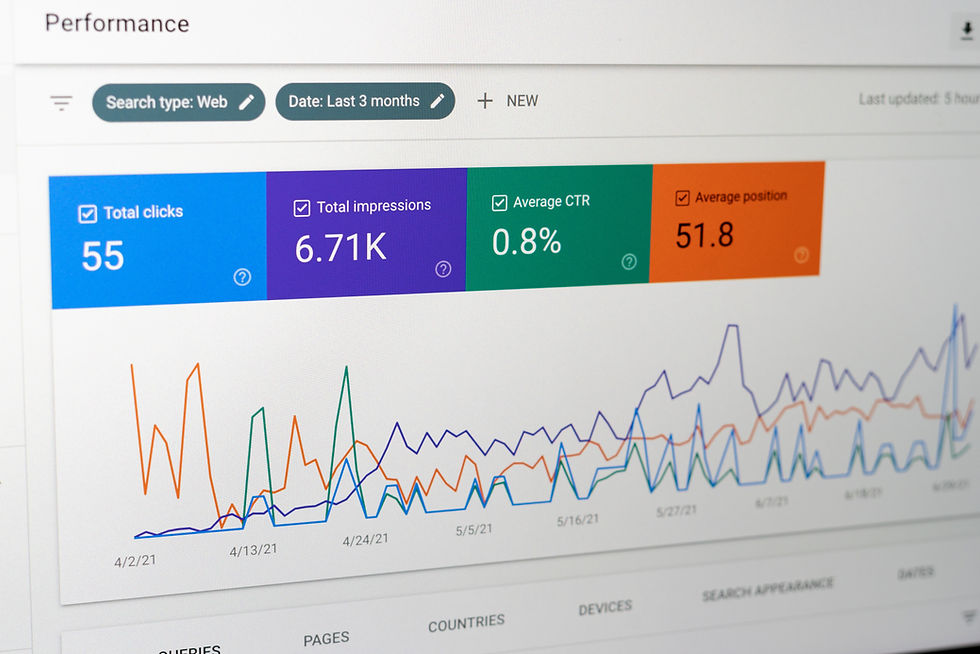
Why Small Businesses Need a Different Kind of SEO Software
Limited time and lean teams
Small businesses usually do not have a dedicated in-house SEO department. The person checking search rankings may also be writing service pages, answering leads, and updating the site. That makes usability far more important than volume of features. Good SEO software should reduce effort, not add another layer of work. It should tell you what matters now, what can wait, and what is likely to move the needle first.
Budgets demand clear value
Enterprise platforms can be powerful, but small businesses often pay for complexity they will never use. A better fit is a platform that combines the essentials: keyword research, technical checks, content guidance, page-level optimization, and rank tracking in a way that feels practical. When every monthly subscription matters, software should help you prioritize actions with commercial value rather than simply surface endless data.
Growth often starts with local or niche visibility
Most small businesses do not need to rank for the broadest, most competitive terms in their industry. They need to appear for high-intent local searches, service-specific keywords, product category terms, and problem-led queries that bring ready-to-buy visitors. The best SEO software for this environment helps identify realistic openings and supports gradual, sustainable gains instead of chasing vanity keywords.
What the Best SEO Software Should Actually Help You Do
Find realistic keyword opportunities
Keyword research is not just about search volume. For a small business, the better question is whether a term is relevant, attainable, and commercially meaningful. Strong SEO software should help surface related keywords, search intent patterns, and content gaps so you can create pages that match what customers are really looking for. It should also help you separate high-effort, low-value targets from the terms that can drive qualified traffic.
Improve the pages that matter most
On-page SEO still forms the foundation of search performance. Titles, headings, internal links, page structure, topical alignment, and content clarity all influence visibility. The best platforms make this work easier by pointing out weak spots on the pages most likely to generate leads or sales. Rather than producing generic checklists, they should connect recommendations to specific URLs and show what to improve first.
Catch technical issues before they suppress visibility
Small business sites often lose performance for avoidable reasons: broken internal links, duplicate metadata, slow-loading templates, indexing issues, redirect chains, missing canonical tags, or pages that search engines cannot properly crawl. Good SEO software should run clear technical audits and present problems in plain language. Just as important, it should distinguish between critical issues and minor imperfections so teams do not spend hours fixing low-impact details.
Track progress without drowning in reports
Rank tracking and site health monitoring matter, but not if the reporting is so dense that nobody acts on it. The most useful SEO software gives small businesses a clean view of movement over time: which keywords are improving, which pages are slipping, what technical changes were made, and how visibility is evolving. That kind of reporting supports better decision-making because it connects SEO work to actual performance trends.
Must-have: keyword discovery tied to intent and relevance
Must-have: page-level optimization guidance
Must-have: technical audit tools with prioritization
Must-have: rank tracking that is easy to interpret
Highly valuable: local SEO support, competitor insights, and workflow guidance
A Practical Review Framework for Comparing SEO Software
If you are comparing options, it helps to judge them against the same criteria rather than brand claims. The strongest platforms usually perform well across a few core areas: clarity, coverage, prioritization, and usability. The table below offers a practical lens for evaluation.
Evaluation area | What good looks like | Why it matters for small businesses |
SEO audits | Clear issue summaries, page-level detail, priority scoring | You can fix important problems without needing specialist expertise |
Keyword research | Relevant suggestions, intent clues, manageable opportunities | You avoid wasting effort on terms that are too broad or too competitive |
On-page guidance | Actionable recommendations for titles, headings, content, and internal links | You improve existing pages faster and more consistently |
Technical SEO | Crawlability, indexing, speed, structured issue reporting | You catch site-wide barriers that content updates alone cannot solve |
Rank tracking | Simple visibility monitoring by keyword, page, and location | You can measure progress without sorting through irrelevant noise |
Local visibility | Support for listings, local pages, and location-based terms | Essential for service businesses and area-based search demand |
Workflow support | Easy-to-follow tasks, sensible dashboards, useful summaries | Your team is more likely to keep using the platform every week |
A short demo or trial should answer one main question: does this platform tell you what to do next? If the answer is unclear after a few sessions, it is probably too complex for the role it is supposed to play in a small business.
How to Match SEO Software to Your Business Model
Local service businesses
For law firms, clinics, home services, consultants, and other local providers, visibility often depends on local intent and service specificity. The right SEO software should support local landing pages, identify city- or region-based keyword opportunities, flag duplicate service content, and help strengthen business discoverability across key listings. In this context, tools that focus only on national rankings may miss where actual revenue is won.
E-commerce businesses
Online stores need software that can handle larger page counts, category optimization, internal linking, product discoverability, and recurring technical checks. Thin category copy, duplicate product metadata, poor faceted navigation, and slow pages can all interfere with performance. Here, SEO software should make it easier to work at scale without losing sight of commercial priorities such as product pages, collections, and transactional search intent.
Content-led businesses and B2B firms
For companies that depend on authority, education, and lead generation, the ideal platform should support ongoing content planning as well as page optimization. That means strong keyword clustering, related-topic suggestions, content gap discovery, and clear insights into which articles or service pages deserve updating. A good system helps connect blog strategy to business pages instead of treating content as an isolated publishing exercise.
The point is simple: there is no universal best SEO software in the abstract. There is only the best fit for the way your business wins customers. Small businesses should buy for workflow relevance, not for prestige or feature inflation.
Where Many SEO Tools Fall Short for Small Businesses
Too much data, too little direction
Many platforms are excellent at collecting information and weak at helping owners act on it. A report that lists 200 issues without telling you which five deserve immediate attention is not especially useful. Small teams need prioritized guidance that respects limited time and budget. Without that, software becomes another source of overwhelm.
Overbuilt dashboards and steep learning curves
Some tools feel designed for people who already speak fluent SEO. That may be acceptable for agencies, but it creates friction for founders, marketing generalists, and growing teams. If users have to study the platform before they can improve a page title or identify a crawl issue, adoption suffers. The best SEO software should feel intuitive enough to support weekly use, not occasional emergency visits.
Recommendations that ignore business context
Not every technical issue deserves equal urgency, and not every keyword is worth pursuing. Software that treats every site the same can push businesses toward busywork: rewriting pages that already perform well, obsessing over low-value terms, or applying generic advice to pages with different search intent. Strong tools help teams understand trade-offs so effort stays aligned with business goals.
Weak support for implementation
Finding issues is only half the battle. Small businesses also need help translating findings into changes across content, site structure, listings, and performance improvements. Platforms that bridge that gap by combining audits with guided optimization, publishing support, or clearer workflows tend to deliver more practical value than tools that stop at diagnosis.
A Closer Look at Rabbit SEO Traffic Booster
Why it fits the small-business mindset
Rabbit SEO Traffic Booster is a good example of the kind of platform that can appeal to SMBs because it focuses on discoverability and practical website improvement rather than enterprise-style complexity. For smaller teams, that matters. The goal is not to build a reporting empire. It is to improve rankings, fix visible weaknesses, and create a repeatable optimization routine that the business can actually maintain.
That is why some owners look to Rabbit SEO Traffic Booster, whose SEO software is positioned around the core jobs that usually matter most: auditing site health, improving on-page elements, tracking rankings, researching keywords, and supporting the wider work of technical fixes, content publishing, local listing management, and link-building efforts where appropriate.
What stands out in day-to-day use
For small businesses, the value of a platform often comes from how well it connects the dots. An audit should lead to fixes. Keyword research should inform page optimization. Ranking changes should prompt updates. Competitor insights should reveal practical opportunities rather than vague benchmarks. Rabbit SEO Traffic Booster fits naturally into this kind of workflow because it speaks to the real sequence of SEO work rather than treating each task as a separate silo.
Who should consider it most seriously
Businesses that want an all-in-one working environment are likely to benefit most. That includes local companies trying to become more visible in search, lean e-commerce brands needing clearer optimization priorities, and service businesses building content around their expertise. It will not replace the need for strong positioning, thoughtful content, or a sound website, but it can make the work more structured and easier to sustain. That is often the difference between sporadic SEO and steady search growth.
A Simple Buying Checklist Before You Commit
Before choosing any SEO software, small businesses should pressure-test the decision against everyday reality. A polished demo is not enough. Use this checklist to avoid expensive mismatches.
Define your primary SEO goal. Is it local visibility, lead generation, product traffic, or content growth?
List your real constraints. Time, technical skill, publishing capacity, and budget should shape the choice.
Test the onboarding experience. You should understand the dashboard and first priorities quickly.
Review recommendation quality. Look for advice that is specific, clear, and worth acting on.
Check whether reporting is usable. If the results are hard to interpret, the tool will be underused.
Consider workflow coverage. Audits alone are not enough if you also need keyword ideas, on-page support, and tracking.
Choose consistency over complexity. A slightly simpler platform used every week beats an advanced one nobody touches.
That final point is often the most important. SEO compounds when the work is continuous. Software should support that habit, not interrupt it.
Choosing the Best SEO Software with Confidence
The best SEO software for small businesses is not the most famous name or the most feature-heavy platform. It is the one that helps you make better decisions, act on them quickly, and maintain momentum over time. If a tool can surface worthwhile keyword opportunities, identify technical issues clearly, guide page improvements, and show progress in a way your team can understand, it is doing its job well. For many small businesses, that means favoring focused, usable platforms over sprawling systems built for larger organizations. Choose software that matches your business model, your resources, and your actual workflow, and your SEO becomes far more likely to turn into measurable visibility rather than a pile of unread reports.


Comments